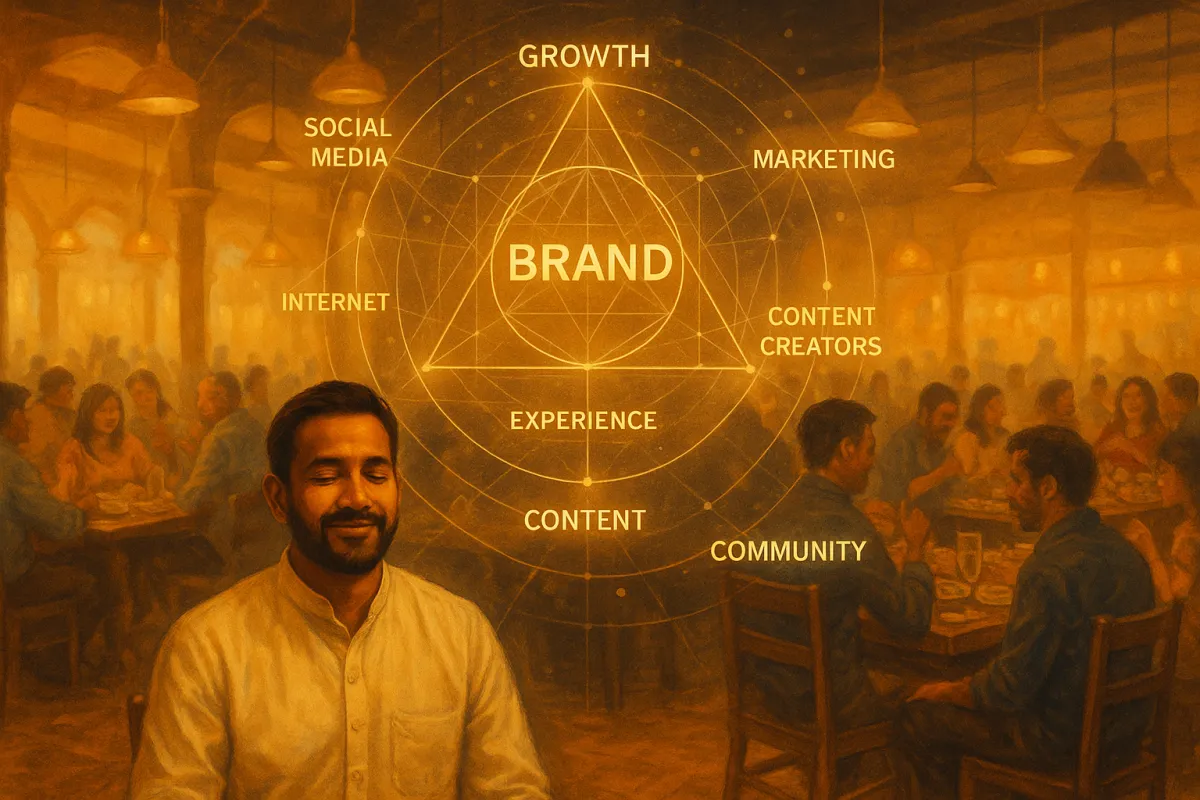
Restaurant Social Media Marketing: Why Your Content Isn't Working (And How to Fix It)
Real talk: When was the last time you scrolled through your own Instagram and felt proud?
Not "it's fine for a small business" proud. Actually proud. The kind of proud where you'd show it to a stranger and say "This is my restaurant."
Yeah. That's what I thought.
Your content looks... dated. The photos are dark. The videos are shaky. The vibe is off.
And here's the thing—you know it.
You see the coffee shop down the street with their aesthetic posts. You see the new fusion restaurant with their professional videos. You see other businesses absolutely crushing it on social media.
Then you look at yours and think "Well, we're just a small restaurant. We can't afford that."
But that mindset? That's what's holding you back.
Let me show you what's really happening and how to fix it.
The Truth About Why People Choose Your Restaurant
Here's something most restaurant owners don't realize:
People aren't choosing your restaurant because of your chicken tikka masala recipe.
I know. You've perfected that recipe for 15 years. Your customers rave about it. You're proud of it.
But here's the reality—before anyone tastes your food, they have to decide to walk through your door.
And that decision? It's made online.
They choose you because:
They saw a video that made them hungry. Their friend posted a story from your restaurant. They kept seeing your name pop up. Your Instagram made them curious. They heard about you from three different people. The photos looked incredible.
They're buying the experience. The brand. The feeling.
The food comes later. First, they need a reason to try you in the first place.
And right now? Your online presence isn't giving them that reason.
Why "Great Food" Isn't Enough Anymore
Let me tell you about two Indian restaurants in the same neighborhood.
Restaurant A: Amazing food. The chef trained in Mumbai. Everything is authentic. Regulars love it. But their Instagram? Random photos taken on someone's phone. Posted whenever they remember. No real strategy.
Restaurant B: Good food. Not amazing, but solid. But their content? Professional photos. Engaging videos. Consistent posting. They work with a content creator twice a month.
Guess which one is growing?
Restaurant B is packed every weekend. They're getting tagged in stories constantly. People are driving from 30 minutes away to try them.
Restaurant A is wondering why they're not busier. "But our food is better!" they say.
That's true. But nobody knows it.
Because in 2025, great food keeps customers coming back. But great marketing gets them through the door the first time.
You need both.
The Real Reason Your Marketing Feels Like a Waste
Let me guess what you've tried:
You ran some Facebook ads. You did a Diwali promotion. You tried posting more on Instagram. You made flyers for the neighborhood. You hosted a special event night.
And... nothing really changed.
Maybe you got a small bump. Then everything went back to normal.
So you think "Marketing doesn't work for us."
But that's not true.
What doesn't work is doing the same thing as everyone else.
There are probably five Indian restaurants within three miles of you. And I bet at least three of them are running similar promotions, posting similar content, and trying similar tactics.
You're all competing for attention using the exact same playbook.
That's why it feels like nothing works.
The restaurants that ARE growing? They're doing something different. They're standing out. They're creating content that makes people stop scrolling.
What Happens When You Hire Help (And Why It Usually Fails)
Here's a pattern I see constantly:
Restaurant owner finally decides to invest in marketing. They hire someone or an agency. "Finally, someone who knows what they're doing!"
Week 1: Everything seems great. Lots of planning.
Week 3: Owner starts having "suggestions." Can we use this photo instead? I don't like that caption. Why didn't you post about our lunch special?
Week 8: The marketing person is frustrated. Nothing they suggest is good enough. Every post needs owner approval. The creativity is gone.
Month 4: The marketing person quits or the agency drops you.
And you're back to posting blurry samosa photos yourself.
Sound familiar?
Here's what went wrong: You hired experts, then didn't let them be experts.
I get it. It's your restaurant. Your baby. You care deeply about how it's represented.
But here's the hard truth: You're not a marketer.
You know how to run a restaurant. You know how to make incredible food. You know how to create an experience.
They know how to make people care about all that online.
When you hire experts, your job is to share your vision, then step back. Give them the freedom to do what they do best.
Share ideas? Absolutely. Collaborate? Yes. But micromanage every post? That's how you lose good people and end up with mediocre results.
The Content Problem Nobody Talks About
Let's do an exercise.
Pull up your Instagram right now. Open it up and really look at it.
Now scroll through your feed.
Notice the post above yours. Maybe it's a fitness influencer with a bright, crisp photo. Professional lighting. Clean aesthetic.
Notice the post below yours. Maybe it's a popular coffee shop with a trendy video and thousands of likes.
Now look at your post again.
Dark photo taken on an iPhone. Text overlay that's hard to read. Generic caption. 15 likes.
Be honest with yourself: If you saw all three posts while scrolling, which would make you stop?
Probably not yours.
And that's the problem.
Your content is competing against everyone else's content. And right now, yours looks like it's from a different era.
I'm not trying to hurt your feelings. I'm trying to help you see what your potential customers see.
When your content looks low-quality, people assume your restaurant is low-quality.
That's not fair. That's not right. But it's human nature.
People make split-second judgments based on what they see online. And right now, you're losing those judgments.
What the Big Players Know (That You Don't)
Want to know something fascinating?
Shake Shack, Panda Express, Olive Garden—these massive brands are investing MORE in content creators than in traditional advertising.
Think about that. Billion-dollar companies with huge marketing budgets.
They could run TV commercials. Billboard ads. Radio spots. Massive social media ad campaigns.
Instead, they're paying content creators to make organic posts.
Why?
Because organic content works better.
When Shake Shack posts a video of their new burger, millions of people see it. They watch it because they want to, not because they're being interrupted by an ad.
People save it. Share it. Tag their friends. The video keeps working for weeks or months.
An ad? You pay for every impression. The second you stop paying, it stops working.
Content builds something permanent. Ads are temporary.
If the biggest restaurant brands in the world are investing in organic content over ads, what makes you think your small restaurant can succeed without it?
The Math That Changes Everything
"But content creators are expensive," you're thinking.
Let's talk about that.
A solid content creator charges $500-1000 per session. Bring them in twice a month, that's $1000-2000/month.
Sounds like a lot, right?
Now let's look at what happens if you DON'T invest in content:
You post inconsistently. When you do post, it's low-quality phone photos. Your Instagram stays small. New customers don't discover you. You rely entirely on word-of-mouth and hope.
How much revenue are you missing because people don't know you exist?
Now let's look at what happens when you DO invest:
Professional content that stops people from scrolling. Consistent, high-quality posts that build your brand. New customers discovering you every week because your content makes them curious.
If that content brings in just 10 new customers per month who spend $40 each, that's $400 in NEW revenue.
But it usually brings way more than that. Because good content compounds. That video you post today could bring in customers six months from now.
Compare that to paid ads:
You spend $1500 on Facebook ads. You get some clicks. A few new customers. Then it's gone. Next month, you have to spend another $1500 for the same result.
With content, you're building an asset. Something that keeps working over time.
That's why smart restaurants invest in content, not ads.
What Your Content Should Actually Show
Most restaurants get this completely wrong.
They post photos of their lunch buffet sign. Their daily specials. Generic "Come try our delicious food!" posts.
Nobody cares about that stuff.
Your content should make people FEEL something. Make them hungry. Make them curious. Make them want to experience what you're showing.
Here's what actually works:
Show the tandoori chicken sizzling as it comes out of the oven—that sound, that smoke, that color. Capture the moment someone pulls apart your naan and you see the layers and texture. Film the vibrant colors of your curry dishes in natural light. Show your chef's hands working the dough, the skill and care that goes into each dish. Capture the energy of your restaurant on a Friday night when it's buzzing. Share your team laughing together, the real personalities behind the food.
This is the content people actually want to watch.
Not another "Special today!" post. Not another stock photo with text overlay. Not another flyer screenshot.
Your content should be as good as your food.
You wouldn't serve a customer a dish that looks thrown together. Why are you serving them content that looks thrown together?
The Organic Growth Strategy
Here's what successful restaurants are doing:
They're investing in content creators who understand their brand. Someone local who comes in regularly, gets to know the restaurant, and creates authentic content that feels real.
This person isn't designing your menu. They're not running your website. They're not your full-time employee.
They're creating the visual stories that make your restaurant impossible to ignore.
Then you take that content and use it everywhere. Instagram, Facebook, TikTok, your website, email newsletters.
This is how modern restaurants grow.
Not through flyers and promotions that everyone ignores. Through authentic, engaging content that shows people what makes your restaurant special.
The best part? Once you have great content, it works 24/7. While you're sleeping, someone in another city is scrolling through Instagram, sees your video, saves it, and plans to visit next time they're in town.
You can't buy that with traditional advertising.
Why Patience Matters (But Only for the Right Things)
Building a brand through content takes time. You won't go viral overnight. You won't be famous in a week.
But here's what will happen:
Month 1-2: You're building a library of quality content. Your feed starts looking more cohesive and professional.
Month 3-4: People start noticing. Your engagement goes up. You start getting more profile visits and saves.
Month 5-6: New customers start saying "I found you on Instagram!" You're showing up in local searches more. Your community is growing.
This is the right kind of patience. Building something real that lasts.
But DON'T have patience for things that don't work:
Posting low-quality content and hoping it gets better. Running the same promotions as everyone else. Making flyers that nobody reads. Doing local events that bring no long-term value.
These tactics give you tiny, temporary results.
Quality content gives you growing, permanent results.
Choose the long game that actually works.
Your Real Job as the Owner
Let me clarify something important about your role:
Your job is NOT to be the photographer, videographer, copywriter, and social media manager.
Your job is to:
Lead your team and create a culture they're proud to be part of. Ensure every customer has an experience worth talking about. Maintain the quality that makes your food special. Build genuine relationships with your regulars. Make sure your operations run smoothly so your staff can succeed.
That's what you're exceptional at. That's where you should focus your energy.
Marketing, content creation, social media strategy—these are specialized skills. Hire people who are great at them.
Then let them do their work.
The most successful restaurant owners I know? They're not the ones trying to do everything. They're the ones who've learned to identify great talent and then get out of the way.
The struggling owners? They're spread thin across twenty different responsibilities, doing all of them just okay instead of doing their core job exceptionally.
Which one are you?
The Opportunity Right in Front of You
Here's the exciting part:
Most of your competitors are still making the same mistakes you are.
They're posting low-quality content. They're running the same tired promotions. They're not investing in their brand.
This is your opportunity to stand out.
While they're stuck in 2015 marketing tactics, you can leap ahead to what actually works in 2025.
Invest in quality content. Build a real brand. Show up consistently with posts that make people stop and pay attention.
In six months, you could be the restaurant everyone's talking about.
Not because you have the fanciest food. Not because you spent the most on ads.
Because you showed up online in a way that made people care.
That's the opportunity. The question is: Will you take it?
READY TO TRANSFORM YOUR RESTAURANT'S BRAND?
We're offering FREE 30-minute strategy calls for restaurant owners who want to finally get their marketing right.
We'll show you:
✅ What's actually wrong with your current content (and how to fix it without starting from scratch)
✅ How to find and work with the right content creator for your budget and brand
✅ The content strategy that drives real customers through your door, not just likes
✅ How to build organic reach that compounds over time instead of paying for ads forever
✅ Real examples of restaurants doing this right and the results they're seeing
This isn't about selling you something. It's about showing you what's possible when you invest in the right things.
But this is only for restaurant owners ready to make a real investment in their brand.
If you're looking for quick fixes or free shortcuts, this isn't for you.
If you're ready to build something that lasts? Let's talk.
Book your free strategy call here →
Stop hoping people will discover your restaurant by accident. Start building a brand they can't ignore.
Click to schedule your call now →
Frequently Asked Questions
Q: How much should I realistically budget for content creation?
For a restaurant serious about growth, plan for $1000-2000 per month. This typically gets you two professional content sessions monthly, providing enough material for consistent posting. Yes, it's an investment. But compare it to what you'd spend on ads that disappear the moment you stop paying. Quality content keeps working long after it's created, bringing customers in for months or even years.
Q: Can't I just take good photos with my smartphone?
Modern smartphones can take decent photos in perfect conditions, but "decent" isn't enough to stand out anymore. Professional content isn't just about the camera—it's about understanding lighting, composition, editing, and what performs well on each platform. Unless you've trained in photography and videography and have hours to dedicate to learning social media trends, it's better to hire someone who does this full-time.
Q: How do I find a content creator who understands food?
Start by searching local food content creators on Instagram and TikTok. Look for people who already create content for restaurants or food brands. Check their portfolio—does their style match your brand? Look at engagement, not just follower count. Reach out to 3-5 creators, ask for their rates and previous work, then do a trial session. If the chemistry and results are good, establish a regular schedule.
Q: What if I can't afford $1000-2000 per month right now?
Start smaller. Maybe bring in a content creator once a month for $500-800. That still gives you professional content to work with. Or consider training a team member who has an eye for content and investing in a good phone gimbal and ring light. The important thing is making ANY investment in quality over continuing with amateur content that's holding you back. Even $300/month on decent content is better than $0 on content that makes you look outdated.
Q: How long before I see actual results from better content?
Most restaurants start seeing increased engagement within 4-6 weeks of posting quality content consistently. Real business results—new customers who mention finding you on social media—typically show up around month 3-4. By month 6, you should see measurable growth in walk-ins and reservations from people who discovered you online. This is a medium-term investment, not an overnight fix, but the results compound and become more valuable over time.
Q: Should I focus on Instagram, TikTok, Facebook, or all three?
Start with Instagram if you have to choose just one—it's where most people discover restaurants. Add TikTok if you can create entertaining, personality-driven short videos (it has huge reach potential). Keep Facebook if you have an older demographic or strong local community there. Better to do 1-2 platforms really well than to spread yourself thin trying to be everywhere with mediocre content.
Q: What if I hire a content creator and don't like their work?
This is why you start with a trial session before committing to ongoing work. In the trial, clearly communicate your brand vision, show examples of content you love, and explain what you want people to feel when they see your content. After the trial, review together. If it's not clicking, that's okay—not every creator is right for every brand. Keep looking until you find someone whose style naturally aligns with your vision.
Q: How hands-on should I be with the content creation process?
Be very involved upfront in setting the vision and brand guidelines. Share what makes your restaurant special, what story you want to tell, what vibe you're going for. Then step back and let the creator do their job. Check in on overall strategy monthly, but don't micromanage individual posts. Give feedback on what's working vs. what's not, but trust their expertise on execution. The sweet spot is being aligned on vision while giving freedom on execution.
Q: What type of content actually converts followers into customers?
Content that triggers genuine appetite and curiosity. Close-up shots of your most visually appealing dishes with perfect lighting. Behind-the-scenes videos showing your chef's skill and passion. The sizzle and steam of food coming out of the kitchen. Customer reactions to their first bite. The atmosphere during your busiest hours. Basically, content that makes people say "I need to experience this myself." Educational content about your cuisine and cultural storytelling also builds connection.
Q: Do I still need to run paid ads if I'm investing in organic content?
Build your organic content foundation first. Once you're consistently posting quality content and seeing good organic engagement, THEN you can amplify your best-performing posts with small ad budgets. Use ads to boost what's already working organically rather than as your primary strategy. Think of organic as your engine and ads as occasional fuel boosts, not the other way around.
Q: How do I measure if content marketing is actually working for my restaurant?
Track multiple indicators: engagement rate on posts, follower growth, profile visits, website clicks from social, DMs asking about your restaurant, and most importantly—ask new customers how they heard about you. If you start hearing "Instagram" or "I saw your videos" regularly, your content is working. Also watch for busier periods following strong content weeks and more reservations/calls after posting high-quality content.
Q: What if my competitors have way better content than me?
That's actually motivating information, not discouraging. It means quality content works in your market. You're not fighting uphill—you're in a market that responds to good content. Study what they're doing well, then find your unique angle. Maybe they're all high-end and serious—you could be warm and family-focused. Maybe they're all modern—you could lean into authentic tradition. Differentiate your story, don't just copy theirs.
Q: Should I post every single day or is less frequent okay?
Consistency matters more than frequency. Posting 3-4 quality posts per week every week is far better than posting daily for two weeks then disappearing. Stories and Reels can be more frequent since they're lower-lift. The key is establishing a realistic schedule you can maintain with your content supply. Better to post less frequently with great content than daily with mediocre content.
Q: What mistakes should I absolutely avoid with content marketing?
Biggest mistakes: Posting inconsistently (confuses the algorithm and your audience). Using low-quality photos or videos that make you look unprofessional. Over-promoting instead of entertaining/inspiring (nobody wants to see constant ads). Ignoring comments and DMs (social media is social—engage!). Giving up after a few weeks (results take time). And micromanaging your content creator to the point where they can't do good work.
Q: How do I get my staff on board with content creation?
Make it fun, not a chore. Share the vision of what you're building together. Show them examples of restaurants that grew their brand through great content. If they're featured in content, ask permission and show them the final posts (people love being showcased positively). Consider small bonuses for team members who create shareable moments with customers. When they see content bringing in customers who specifically mention social media, they'll understand why it matters.
Q: What if I've tried better content before and it didn't work?
The question is: Did you really try, or did you try for two weeks then give up? Did you post consistently for 3-6 months with professional-quality content? Did you engage with your audience and build community? Or did you post some better photos for a few weeks while still mixing in low-quality content? True content marketing requires commitment over months, not weeks. If you did commit and saw zero results, maybe the content wasn't as good as you thought, or your strategy needs adjustment. That's what professional help is for.
The Real Bottom Line
Your restaurant's content is a direct reflection of your brand.
Right now, what is it saying?
If your content looks rushed, people assume your service is rushed. If your content looks cheap, people assume your food is cheap. If your content looks outdated, people assume your restaurant is outdated.
That's not fair. But it's reality.
The good news? You can change this.
You can invest in quality content. You can build a brand that makes people stop scrolling. You can become the restaurant everyone in your area knows about.
Not because you spent the most money. Not because you have the biggest team.
Because you showed up consistently with content that made people care.
The restaurants thriving right now made this decision months ago. The ones struggling are still making excuses about why they can't invest in their brand.
Which one are you going to be?
Your competitors aren't waiting. Your potential customers are scrolling right now, discovering restaurants through content.
The question is: Will they discover yours?
Book your free strategy call and let's build your brand the right way →
P.S. - Pull up your Instagram one more time. Really look at it. If you feel even a little embarrassed by what you see, that's your sign. It's time to make a change. Your future customers are waiting to discover you—give them something worth discovering.
