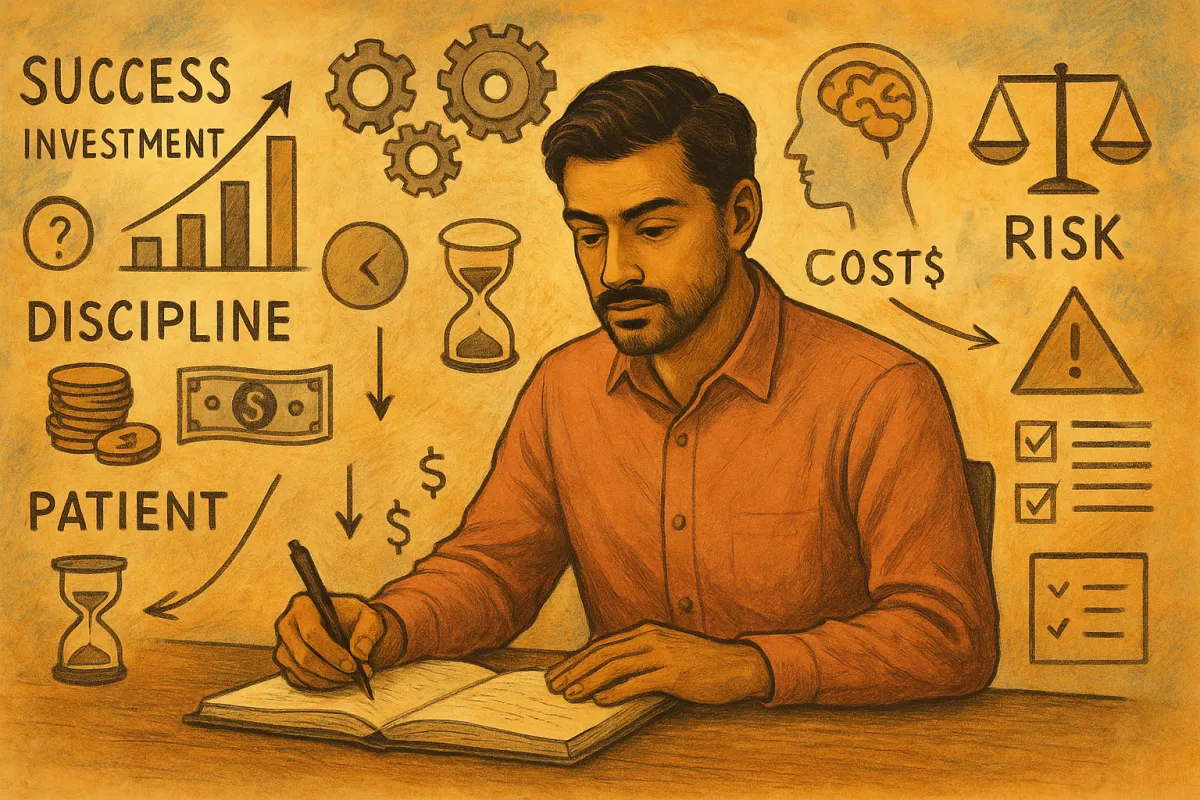
Think Twice Before You Spend: The Entrepreneurial Mindset Every Restaurant Owner Needs to Build Something Great
Think twice before spending it.
Is it really necessary or do I just want it?
This question should run through your mind before every purchase. Every investment. Every decision that involves your money, your time, or your energy.
Most restaurant owners never ask this question. They spend in a hurry. They buy because something feels urgent. They invest because someone told them to. Then they regret it. Then they wonder why the money disappeared without results.
Every purchase has value in it. Every purchase has meaning to both your personal life and your business life. You do not need to treat them differently. Until your restaurant gets investors or outside funding, your money is your money. What you spend on yourself and what you spend on your business both come from the same place.
This is not about being cheap. This is about being intentional. This is about being the type of person who pursues greatness through discipline, not the type who chases every shiny opportunity and wonders why nothing works.
The Spirit That Cannot Be Broken
Here is what separates restaurant owners who build something lasting from those who burn out and close.
The ones who last have a spirit that keeps going no matter what.
Small mistakes happen. Bad months happen. Equipment breaks. Employees quit. Customers complain. Costs rise. Competition increases. A hundred things go wrong that you never expected.
The restaurant owners who survive and thrive are not the ones who avoid these problems. Nobody avoids them. They are the ones whose spirit and energy continue forward regardless.
You fail but you learn. You get knocked down but you get back up. You analyze what went wrong. You adapt your approach. You become a master of your own habits. You do not make the same mistake twice because you actually pay attention to what happened.
This is not motivation poster nonsense. This is survival. The restaurant industry destroys people who cannot develop this resilience. It rewards people who can.
Taking Things Seriously
There is a difference between working hard and taking things seriously.
Plenty of restaurant owners work hard. They put in long hours. They sweat. They exhaust themselves. But they do not take the business seriously in the way that produces results.
Taking things seriously means not taking anything for granted. It means appreciating what you have built so far. It means giving proper attention to every detail that matters.
Taking things seriously means when you start something, you do not stop until it reaches the goal you set in your mind. Not when you get tired. Not when it gets difficult. Not when something more exciting comes along. You finish what you start because that is who you are.
Taking things seriously means slowing down enough to do things right. Not rushing through decisions. Not cutting corners because you are impatient. Taking the time required to build something that actually works.
Most restaurant owners take their work seriously but not their business. They work hard in the kitchen but do not think hard about strategy. They put effort into service but not into systems. They are serious about today but not about tomorrow.
The ones who build something great are serious about everything.
The Hard Truth About Entrepreneurship
Let me be honest about something.
Entrepreneurship is hard. Building a restaurant that actually succeeds is one of the hardest things you can do.
Success requires sacrifice. Real sacrifice. Not the kind you talk about on social media. The kind that costs you things you care about.
It requires risk. Not reckless gambling. Calculated risk based on knowledge and judgment. But risk nonetheless. Putting yourself in positions where you could lose.
It requires saying no to things. Good things. Fun things. Things your friends are doing. Things that would be nice but would distract from what actually matters.
It requires taking time with things when everyone else wants you to hurry. It requires staying away from things that would pull you off course. It requires discipline that most people are not willing to develop.
What Other People See
From the outside, your life might not look good.
Your family might think you are absent. Your friends might think you have changed. People who do not understand entrepreneurship might look at your sacrifices and see someone who is struggling or lost.
They see you working when they are relaxing. They see you saying no when they are saying yes. They see you stressed about things they do not understand. They see you distant when they want you present.
Some of them might think you are failing. Some might think you have lost your way. Some might feel like they have already lost you to this thing you are building.
But here is what they do not see.
You are in love with what you are creating. The goals and vision you have. The team you are building. The future you can see that they cannot. It is exciting to work toward something meaningful. It is fulfilling in a way that is hard to explain to people who have not experienced it.
Not many people can feel the same love for their work that they feel for their family. For the ones who do, work does not feel like sacrifice. It feels like purpose.
For them it might look like disgrace now. But it is patience. It is building toward better living and success later. It is planting seeds that take years to grow.
Daddy took the risk ten years ago to live like this now. The sacrifice you make today is the freedom you earn tomorrow.
Understanding Real Risk
People have to understand something about taking risk.
Taking risk does not mean you know nothing. It does not mean you do not understand what you are getting into. It does not mean you are blind to the potential outcomes.
Real risk-taking means you have never done this specific thing before, but you know about it. You have studied it. You have seen others do it. You understand the potential outcomes, both good and bad. You have done your homework.
Then you say, let me see if it works for me.
That is informed risk. That is smart risk. That is the kind of risk that builds empires.
What most people call risk-taking is actually just stupidity.
They hear about something. They get excited. They want to do it immediately. They do not care what is actually involved. They do not understand the details. They do not know the potential outcomes. They just jump.
That is not risk-taking. That is gambling without knowing the odds. That is how people lose everything.
The best entrepreneurs have eyes on everything. They are curious about everything. They never stop learning. They stay focused even while they explore.
They take risks, yes. But informed risks. Calculated risks. Risks where they understand what they are getting into even if they have never done it before.
The Psychology Advantage
Here is something that separates good restaurant owners from great ones.
Great restaurant owners understand people.
Having a good understanding of behavioral science and psychology is one of the greatest skills you can develop. It helps you give customers the best experience at every touchpoint.
Inside the restaurant. What makes people feel welcome? What makes them comfortable? What makes them want to stay longer, order more, come back again?
Outside the restaurant. What makes someone notice you? What makes them choose you over the competition? What makes them tell their friends?
Online. What makes someone stop scrolling? What makes them click? What makes them trust you before they have ever visited?
From the moment they first hear about you to the moment they become a regular who comes back on repeat. Every step of that journey is influenced by psychology. Every touchpoint is an opportunity to create connection or lose it.
Everything in a successful restaurant is a system that is deployed strategically. The lighting. The music. The menu design. The staff greeting. The follow-up message. All of it works together to create an experience that brings people back.
You probably understand this at some level. What you need is people who have the specific micro-skills to execute it.
Choosing the Right Partners
This brings us to the most important risk you will take.
Choosing your partners.
You cannot do everything yourself. You do not have every skill required to build a great restaurant. Nobody does. You need people who have the specific capabilities you lack.
Finding those people is a risk. You are trusting them with your money, your brand, your future. You are betting that they can deliver what they promise.
The wrong partners will waste your resources and set you back. The right partners will accelerate your growth and multiply your efforts.
This is why you think twice before spending. This is why you never purchase in a hurry. This is why every investment has to have clear value.
When you choose a marketing partner, you are not just buying a service. You are choosing someone who will represent your brand to the world. Someone who will influence how customers perceive you. Someone whose work will either attract customers or push them away.
That decision deserves serious thought. It deserves research. It deserves conversation. It deserves the same careful analysis you would give to any major business decision.
Do not rush it because someone created urgency. Do not choose based on price alone. Do not hire because you are tired of looking.
Take the time to find the right one. Then take the risk. An informed risk. A calculated risk. A risk you have thought through.
That is how you build something great.
The Mindset Summary
Let me bring this all together.
Think twice before every purchase. Ask whether it is necessary or just wanted. Never buy in a hurry.
Develop the spirit that keeps going no matter what happens. Learn from failures. Adapt constantly. Master your habits.
Take everything seriously. Do not take things for granted. Finish what you start. Give proper attention to what matters.
Accept that entrepreneurship requires sacrifice. Say no to distractions. Take time with important decisions. Stay focused on what you are building.
Understand that others may not see what you see. Your sacrifice today is your freedom tomorrow. Patience is the price of success.
Take risks, but informed risks. Study before you leap. Understand potential outcomes. Never confuse excitement with preparation.
Learn psychology and human behavior. Every customer touchpoint is an opportunity. Systems create consistent experiences.
Choose partners carefully. The right ones multiply your efforts. The wrong ones waste your resources. This decision deserves serious thought.
This is the mindset that builds great restaurants. Not luck. Not talent. Not connections. Mindset and discipline applied consistently over years.
Take the Next Step
If you are looking for a marketing partner who takes your business as seriously as you do, we should talk.
We specialize in Indian restaurants. We understand the industry. We know what works and what does not. We have helped restaurants grow through strategic marketing that actually produces results.
We do not rush. We do not pressure. We take time to understand your restaurant before we recommend anything.
Schedule a call and let us see if we are the right fit.
https://www.anthconsulting.com/restaurant-growth-challenge#calendar-652ZsXHqbhZk
The risk of choosing the right partner is worth taking. The risk of choosing the wrong one is not.
Frequently Asked Questions
Why is it important to think twice before every business purchase?
Every purchase uses resources that could go elsewhere. When you buy in a hurry, you often regret it later. Taking time to evaluate whether something is truly necessary versus just wanted helps you invest in things that actually move your business forward. This discipline compounds over time into significant savings and better results.
What does it mean to take entrepreneurship seriously?
Taking entrepreneurship seriously means not taking anything for granted. It means finishing what you start. It means giving proper attention to strategy, systems, and long-term thinking, not just daily operations. It means treating your business decisions with the weight they deserve rather than rushing through them or cutting corners.
How do you keep going when things get hard?
Develop the mindset that failures are learning opportunities. When something goes wrong, analyze what happened and adapt your approach. Build the habit of getting back up regardless of what knocked you down. This resilience is not something you either have or do not have. It is something you develop through practice.
Why do successful entrepreneurs sacrifice so much?
Building something meaningful requires focus that other things compete for. Time spent with friends, easy entertainment, and comfortable routines all pull against the work required to build a successful restaurant. The sacrifice is the price of creating something that most people never create. It is an investment in a future that others cannot yet see.
What is the difference between smart risk and stupid risk?
Smart risk means you have studied what you are getting into. You understand the potential outcomes. You have seen others do it. You know what you are betting and what you could win or lose. Stupid risk means jumping into something because you are excited, without understanding the details or potential consequences. The first builds wealth. The second destroys it.
Why does psychology matter for restaurant owners?
Every interaction with a customer is influenced by psychology. What makes them feel welcome, what makes them want to return, what makes them tell their friends. Understanding human behavior helps you design every touchpoint for maximum impact. Restaurants that understand psychology create experiences. Restaurants that do not just serve food.
How do you choose the right business partners?
Never choose in a hurry. Research their track record. Talk to their other clients. Understand specifically what they will do for you and how they measure success. Make sure their expertise matches your actual needs. The right partner should understand your business and have proven results in your specific industry.
What if my family does not understand my entrepreneurial journey?
This is common and painful. The people who love you may not see what you see. They may interpret your sacrifice as neglect or your focus as obsession. Communicate your vision clearly. Show them the progress you are making. Be patient with their concerns while staying committed to your path. Success over time often changes their perspective.
