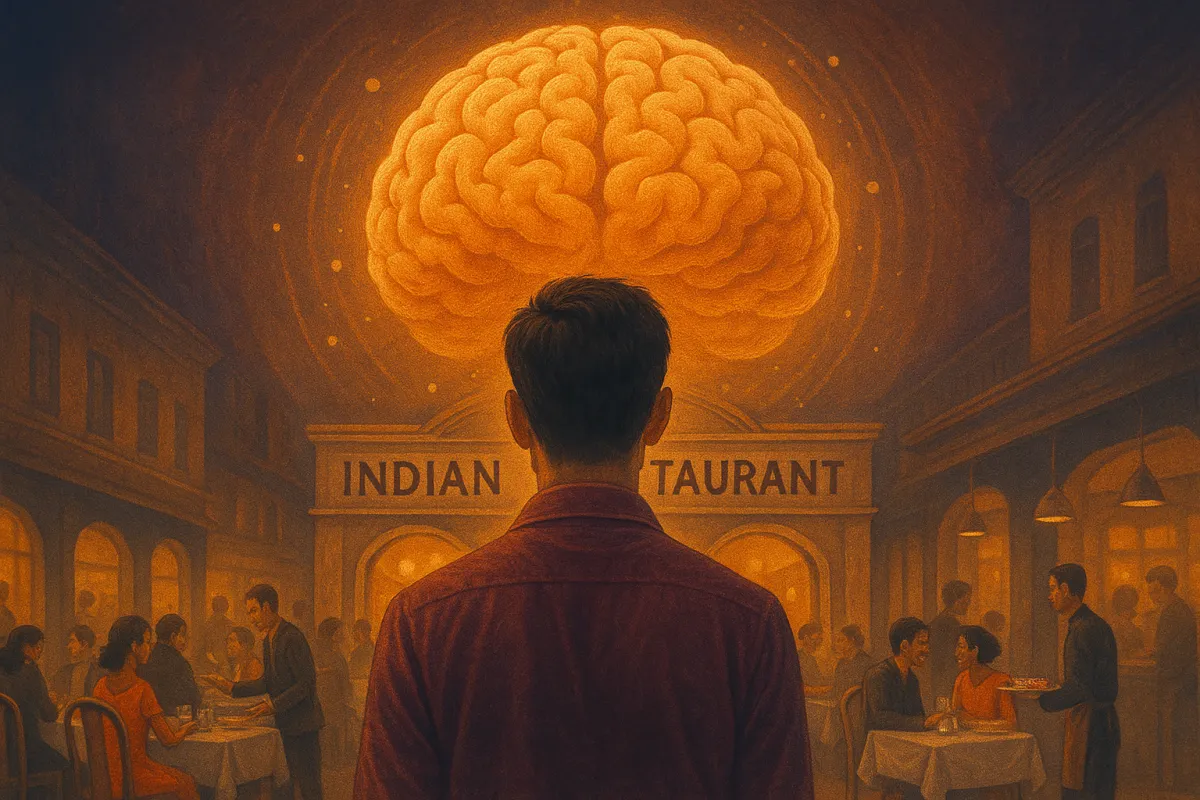
The Psychology of How People Choose Your Restaurant: A Deep Guide for Restaurant Marketing
Why does someone choose your restaurant over the ten others within walking distance?
The answer is not as simple as good food. It never was. The decision to dine at a specific restaurant is one of the most psychologically complex choices a consumer makes. It involves neuroscience, social dynamics, emotional needs, identity expression, and subconscious triggers that most restaurant owners have never considered.
If you want to understand how to attract more customers, you first need to understand the psychology you are creating for them. Because here is the truth that will change how you think about your restaurant: you do not find customers with the right psychology. You create that psychology through every decision you make about your brand, your space, your content, and your experience.
This is the deep guide to understanding why people choose restaurants, and how you can use that understanding to build a restaurant that people cannot resist.
The Neuroscience of Food Desire: What Happens in the Brain
Before someone consciously decides to visit your restaurant, their brain has already been working on that decision at a level they are completely unaware of.
The human brain has two separate systems governing our relationship with food. The first is the hunger system, operated by the hypothalamus at the base of the brain. This is the straightforward part. You are hungry, you need to eat.
But the second system is far more interesting for restaurant owners. This is the reward system, located in the center of the brain, involving regions like the ventral tegmental area, the nucleus accumbens, and the prefrontal cortex. This system does not care whether you are hungry. It cares whether eating will feel good.
When someone sees an image of your food on Instagram, their brain does not wait for hunger signals. The reward circuitry activates immediately. Dopamine, the neurotransmitter associated with pleasure and motivation, begins flowing. Research published in NeuroImage found that the amount of dopamine released when viewing appetizing food directly predicted how much people would eat afterward.
This is why food photography matters so much. It is not about showing people what you serve. It is about triggering a neurochemical response that creates desire before they have tasted anything.
The brain regions involved in food cravings are identical to those involved in addiction. The hippocampus, which governs memory, reinforces reward-seeking behavior. The caudate helps form habits, including food-related ones. The insula creates the emotional connection between food and craving. When these systems fire together, the result is not rational decision-making. It is desire.
Here is what this means for your restaurant. The decision to visit you often begins long before the conscious mind gets involved. Someone sees your content, smells food similar to yours, hears a friend mention your name, or walks past your location. Each of these triggers the reward system. The conscious decision to book a table or walk through your door comes later, after the subconscious has already decided it wants what you offer.
The Two Systems of Decision Making
Neuroscience has identified two distinct decision-making systems in the human brain that directly apply to how people choose restaurants.
System One is fast, automatic, emotional, and impulsive. It operates from deeper brain structures associated with reward and motivation. This system responds to sensory cues, social signals, and emotional triggers. It makes decisions in milliseconds based on pattern recognition and gut feeling.
System Two is slow, deliberate, reflective, and controlled. It operates from the prefrontal cortex and involves conscious reasoning, evaluation of options, and consideration of long-term consequences.
Most restaurant owners market exclusively to System Two. They list their menu items, their prices, their location, their hours. They provide information for rational evaluation.
But the restaurants that fill up night after night understand that System One makes most of the decision. The rational mind then justifies what the emotional brain has already chosen.
This is why atmosphere, imagery, social proof, and emotional storytelling are so powerful. They bypass the analytical mind and speak directly to the system that actually drives behavior.
When someone scrolls through Instagram and stops on your food photo, System One has just made a decision. When they read a friend's enthusiastic recommendation, System One has just made a decision. When they walk past your restaurant and smell something incredible, System One has just made a decision.
System Two comes in afterward to rationalize. The reviews are good. The prices are reasonable. The location is convenient. But the real decision happened earlier, at a level the customer cannot articulate.
Maslow's Hierarchy and Restaurant Choice
Research into consumer behavior at restaurants has revealed something fascinating. The reasons people choose fine dining establishments align precisely with Maslow's hierarchy of needs. But not in the way you might expect.
Yes, restaurants satisfy physiological needs. People need to eat. But that is the baseline, not the differentiator. If satisfying hunger were the only factor, every restaurant would be equally valuable.
The restaurants that create loyalty operate at higher levels of the hierarchy.
Belonging and love represent the first major differentiator. Research shows that restaurants which form emotional connections with guests, greeting them by name, knowing their favorite items, making recommendations based on past visits, dramatically outperform those that treat customers as transactions. A study comparing restaurant ratings found that 40 percent of excellent-rated restaurants maintained detailed customer profiles with notes, while only 15 percent of merely good restaurants did the same.
Esteem comes next. People want to feel respected and valued. The quality of service, the attention to detail, the sense that the restaurant cares about their experience, all of these satisfy esteem needs. Fine dining research concluded that customers select restaurants not just for food quality but for respect and the finest service.
Self-actualization sits at the top. Modern research has found that fine dining restaurants now provide psychological well-being, a type of self-actualization. Customers are not just eating. They are becoming their best selves, expressing their identity, living out their values through their dining choices.
This is why your restaurant's brand matters so much. You are not just serving food. You are helping customers meet deep psychological needs they may not even consciously recognize.
Social Proof: The Power of What Others Choose
Humans are fundamentally social creatures. We look to others to determine correct behavior, especially in situations of uncertainty. Choosing a restaurant is exactly such a situation.
Research confirms that 94 percent of diners choose restaurants based on online reviews. But the influence of social proof goes far deeper than star ratings.
When someone sees a crowded restaurant, their brain interprets this as a signal of quality. Studies on what researchers call herd behavior show that people follow others' choices, especially when selecting a restaurant in an unfamiliar place. A busy dining room triggers the assumption that others know something you do not. An empty restaurant triggers the opposite assumption, even if the food is excellent.
This psychological principle, sometimes called information social influence, means that people assume the actions of others reflect correct behavior. We prefer to use someone else's brain rather than our own. Thinking requires effort. Following the crowd feels safe.
Social media has amplified this effect dramatically. Recent research found that 73 percent of millennials and Gen Z let social media guide their restaurant choices. When asked what would make them most likely to try a restaurant, positive social media reviews outranked discounts by almost two to one.
The implications for restaurant marketing are profound. Your most powerful advertising is not what you say about yourself. It is what others say about you. User-generated content, customer testimonials, influencer recommendations, busy dining rooms captured on video, all of these speak directly to the social proof instinct that drives restaurant choice.
Word of mouth remains the most influential factor in restaurant selection across all research. But in the digital age, word of mouth has scaled. A single enthusiastic Instagram post can reach thousands. A viral TikTok video can transform a unknown restaurant into a destination overnight.
The Atmosphere Effect: How Environment Shapes Experience
The moment a customer walks through your door, they are not consciously evaluating your restaurant. They are feeling it. And that feeling shapes everything that follows, including how they perceive the taste of your food.
Environmental psychology research confirms that atmospheric elements directly affect how food tastes. The same dish eaten in a pleasant setting is perceived as better than when eaten in an unpleasant one. This is not imagination. This is neuroscience.
Consider the sensory elements that shape dining experience.
Lighting forms the foundation of restaurant ambiance. Dim lighting creates intimacy and encourages longer stays, more courses, higher spending. Bright lighting increases energy and turnover, suitable for fast-casual concepts. Research shows that warm, soft lighting over tables makes diners feel more comfortable and affects how they perceive both the space and the food.
Color psychology operates at a subconscious level. Red and orange stimulate appetite and create excitement, which is why fast food chains use them heavily. Blue suppresses appetite but creates calm, suitable for certain upscale concepts. Green signals freshness and health, appropriate for farm-to-table or vegetarian restaurants.
Music affects dining pace and spending. Studies show that slower music makes people stay longer and spend more. Fast-tempo music increases table turnover. The genre and volume should align with your concept and target demographic.
Scent triggers immediate emotional responses because smell connects directly to the limbic system, which controls mood and memory. Research has found that strategic use of restaurant aromas can boost food sales by up to 300 percent. Open kitchens that allow cooking smells to fill the dining room leverage this principle.
Sound management affects comfort and conversation. High noise levels can create energy but also discomfort. Low noise levels promote intimacy but can feel uninviting if too quiet. Effective acoustic design balances atmosphere with the ability to converse.
Every one of these elements is marketing. Every one shapes the psychology of your customers before they taste a single bite.
Status, Identity, and Self-Expression Through Dining
Food choice is never just about food. It is about who we are and who we want to be.
Research into food as self-expression reveals that our dining choices function as social signals. The restaurants we frequent, the cuisines we prefer, the way we present our meals, all communicate our social status, aspirations, and group affiliations.
Someone who regularly dines at fine restaurants is projecting an image of sophistication and affluence. Someone who insists on organic, locally sourced ingredients is expressing values around sustainability and health consciousness. Someone who seeks out authentic ethnic cuisine is signaling cultural openness and adventurousness.
Studies in consumer psychology confirm that consumption is a self-expressive behavior that allows people to be their desired selves. We develop identity through our consumption choices and construct personal narratives through what we eat.
This has profound implications for restaurant positioning. Your restaurant is not just a place to eat. It is a tool for identity construction. When someone chooses you, they are choosing to be a certain kind of person.
Fine dining research explicitly found that customers select restaurants based on esteem and self-actualization needs. The study concluded that dining provides psychological well-being. People are not just seeking food. They are seeking to become who they want to be.
The status signaling aspect of restaurant choice is particularly powerful. Dining at a sought-after restaurant functions as cultural capital, a marker of social status and distinction. The ability to casually mention eating at an exclusive establishment is a form of social currency.
This is why scarcity works in restaurant marketing. Limited reservations, exclusive experiences, membership programs, all of these create the sense that your restaurant is not just a meal but an achievement. An identity marker. A story worth telling.
The Role of Imagination and Anticipation
The dining experience begins long before the first bite. It begins in the imagination.
When someone sees your restaurant on social media, reads a review, or hears a friend's recommendation, their brain begins constructing an anticipated experience. They imagine the food, the atmosphere, the feelings they will have. This anticipation is itself a source of pleasure.
Research into reward systems confirms that anticipation activates the same neural pathways as actual consumption. The dopamine release that drives behavior comes not just from experiencing pleasure but from expecting it.
This is why storytelling matters in restaurant marketing. When you tell the story of your dishes, their origins, the chef's inspiration, the generations of recipes, you are giving customers material for imagination. You are helping them pre-experience the meal before they arrive.
Descriptive language on menus leverages this principle. Research shows that adding evocative descriptions, mentioning family recipes, using sensory adjectives that evoke taste and smell, makes dishes more appealing. The imagination is activated. The anticipated experience is enriched.
Visual content works the same way. A photograph of a beautifully plated dish does not just show what you serve. It triggers imagination. The viewer mentally tastes the food, feels the texture, experiences the satisfaction. The decision to visit is made in that moment of imagined experience.
Creating the Psychology You Want
Here is the insight that transforms how you think about restaurant marketing. You do not find customers who happen to have the right psychology. You create that psychology through every choice you make.
Is your restaurant spontaneous or planned? Elegant or casual? Luxurious or accessible? Fun or serious? Expensive or affordable? Each of these positions creates a different psychological response in potential customers.
The way you represent your restaurant shapes how people imagine experiencing it. Your imagery, your language, your social media presence, your physical space, all of these elements combine to create a psychological frame that either attracts or repels different customer segments.
Consider what psychology you are creating.
If you present your dishes like art in a museum, you create a psychology of appreciation, sophistication, and special occasion. Customers who respond to this framing are seeking elevated experience and are willing to pay for it.
If you present your restaurant like a warm family kitchen, you create a psychology of comfort, belonging, and nostalgia. Customers who respond to this framing are seeking connection and emotional satisfaction.
If you present your space as exclusive and difficult to access, you create a psychology of status and achievement. Customers who respond to this framing are seeking identity markers and social currency.
If you present your food as authentic and rooted in tradition, you create a psychology of discovery and cultural exploration. Customers who respond to this framing are seeking experience and education.
None of these is right or wrong. But each creates a different customer relationship. The mistake is creating psychology accidentally, without intention, and then wondering why you attract the wrong customers or fail to attract enough of any customers.
The Full Sensory Experience
A holistic dining experience engages all five senses, and each sense contributes to the overall perception of value.
Visual elements include not just food presentation but the entire environment. The decor, the lighting, the staff uniforms, the tableware. Research confirms that the visual presentation of dishes changes how people think they taste. Bright colors and neat plating make food seem more appetizing.
Auditory elements include music, ambient sound, and conversation levels. The wrong soundscape can ruin an otherwise excellent meal. The right one can elevate a good meal to memorable.
Olfactory elements are among the most powerful because smell connects directly to memory and emotion. The aroma of bread baking, spices cooking, herbs being prepared, all create anticipation and enhance perception of quality.
Tactile elements are often overlooked but significant. The weight of cutlery, the texture of napkins, the comfort of seating, all contribute to the sense of quality and care. Heavy silverware and soft linens signal luxury at a subconscious level.
Taste is obvious but worth noting in context. The actual flavor of food is interpreted through the lens of all other sensory inputs. The same dish tastes better when the environment is pleasant, the presentation beautiful, the service attentive.
Understanding this multi-sensory reality means understanding that your restaurant is an integrated experience. Marketing the food alone misses most of what actually drives customer satisfaction and loyalty.
What This Means for Restaurant Marketing
If you want customers to choose your restaurant, you need to speak to both their conscious and subconscious minds.
For the conscious mind, provide the rational justifications. Quality food. Reasonable prices. Convenient location. Positive reviews. Clear communication about what you offer and why it is valuable.
For the subconscious mind, trigger the reward systems. Beautiful food photography that creates desire. Social proof that signals safety in choosing you. Atmosphere cues that promise the right experience. Stories that fuel imagination and anticipation.
Understand that people choose restaurants to meet psychological needs beyond hunger. They seek belonging, esteem, self-actualization. They seek status and identity expression. They seek experiences that become stories worth telling.
Create the psychology you want in your customers by being intentional about every element of your brand, your space, your content, and your experience. The restaurant that understands customer psychology does not hope for the right customers. It creates them.
The Truth About Restaurant Marketing
The restaurants that consistently succeed are not necessarily the ones with the best food. They are the ones that understand human psychology deeply enough to create desire, satisfy emotional needs, and become part of their customers' identity.
This is not manipulation. This is understanding. When you truly understand what your customers need psychologically, you can serve those needs authentically. You create real value, not just good food but belonging, esteem, self-expression, memorable experience.
The psychology of restaurant choice is complex. But the fundamental insight is simple. People do not choose restaurants rationally. They choose emotionally, socially, and subconsciously. Then they rationalize the choice afterward.
Speak to the real decision-makers in your customers' minds, and watch your restaurant fill up.
Take the Next Step
Understanding customer psychology is the foundation of effective restaurant marketing. But turning that understanding into action requires strategy, systems, and execution.
We help Indian restaurant owners apply these psychological principles to build brands that customers cannot resist. From visual content that triggers desire to positioning strategies that satisfy deeper needs, we create marketing systems based on how people actually make decisions.
If you are ready to stop guessing and start building a restaurant brand grounded in real psychology, schedule a call. Let us find out if we are the right fit.
https://www.anthconsulting.com/restaurant-growth-challenge#calendar-652ZsXHqbhZk
Frequently Asked Questions
What is the most important psychological factor in restaurant choice?
Research consistently identifies food quality as the most cited factor, but the deeper truth is more complex. Food quality gets people through the door, but emotional connection keeps them coming back. Studies show that restaurant choice aligns with Maslow's hierarchy of needs, meaning customers are seeking belonging, esteem, and self-actualization beyond just satisfying hunger. The restaurants that build loyalty are those that create genuine emotional connections, remember customers by name, and make them feel valued.
How does social media affect restaurant decisions?
Social media has become the dominant influence on restaurant choice for younger generations. Research shows that 73 percent of millennials and Gen Z let social media guide their dining decisions. Positive social media reviews are nearly twice as influential as discounts in motivating first visits. Social media works because it provides social proof at scale, showing potential customers that others have enjoyed the experience, which reduces the perceived risk of trying something new.
Why does restaurant atmosphere matter so much?
Atmosphere shapes perception of food quality at a neurological level. Environmental psychology research confirms that the same dish tastes better in a pleasant setting than an unpleasant one. Elements like lighting, music, scent, and decor all trigger emotional responses before customers taste anything. A 2023 report found that 89 percent of diners consider overall experience, including ambiance, as crucial when choosing a full-service restaurant. Atmosphere is not separate from the food experience. It is integral to it.
How do people actually make the decision to visit a restaurant?
The brain has two decision systems. System One is fast, emotional, and subconscious. System Two is slow, rational, and deliberate. Most restaurant decisions begin with System One responding to triggers like food imagery, social recommendations, or sensory cues. The conscious mind then rationalizes what the emotional brain has already decided. This is why beautiful food photography, word of mouth, and atmospheric cues are so powerful. They speak directly to the system that actually drives behavior.
What role does status play in restaurant choice?
Status is a significant driver, particularly for fine dining and exclusive experiences. Research identifies dining choices as social signals that communicate values, aspirations, and group affiliations. The restaurants someone frequents become part of their identity and cultural capital. Creating scarcity through limited reservations or exclusive experiences leverages this psychology, making your restaurant not just a meal but an achievement and identity marker worth talking about.
How can restaurant owners use scent to attract customers?
Scent connects directly to the brain's limbic system, which controls mood and memory, making it uniquely powerful for triggering emotional responses. Research suggests strategic use of restaurant aromas can increase food sales significantly. Practical applications include open kitchen designs that allow cooking smells to fill the dining room, positioning baking or grilling near entrances to attract passersby, and ensuring the overall scent profile matches your brand positioning.
Why do people choose the same restaurant repeatedly?
Repeat visits are driven primarily by emotional connection and consistency. Research shows that restaurants which know their guests, greet them by name, remember their preferences, and make personalized recommendations create loyalty that transcends food quality alone. The psychology of belonging, one of Maslow's fundamental needs, is satisfied when customers feel recognized and valued. Consistency also matters because it reduces the risk and uncertainty that makes trying new places psychologically costly.
How important are online reviews in restaurant selection?
Extremely important. Research indicates that 94 percent of diners say they would choose a restaurant based on online reviews. Reviews function as social proof, reducing uncertainty by showing that others have had positive experiences. Restaurants with higher review volumes and ratings are perceived as safer choices. However, authenticity matters. Consumers also look for patterns and specific details that suggest genuine experiences rather than manufactured testimonials.
