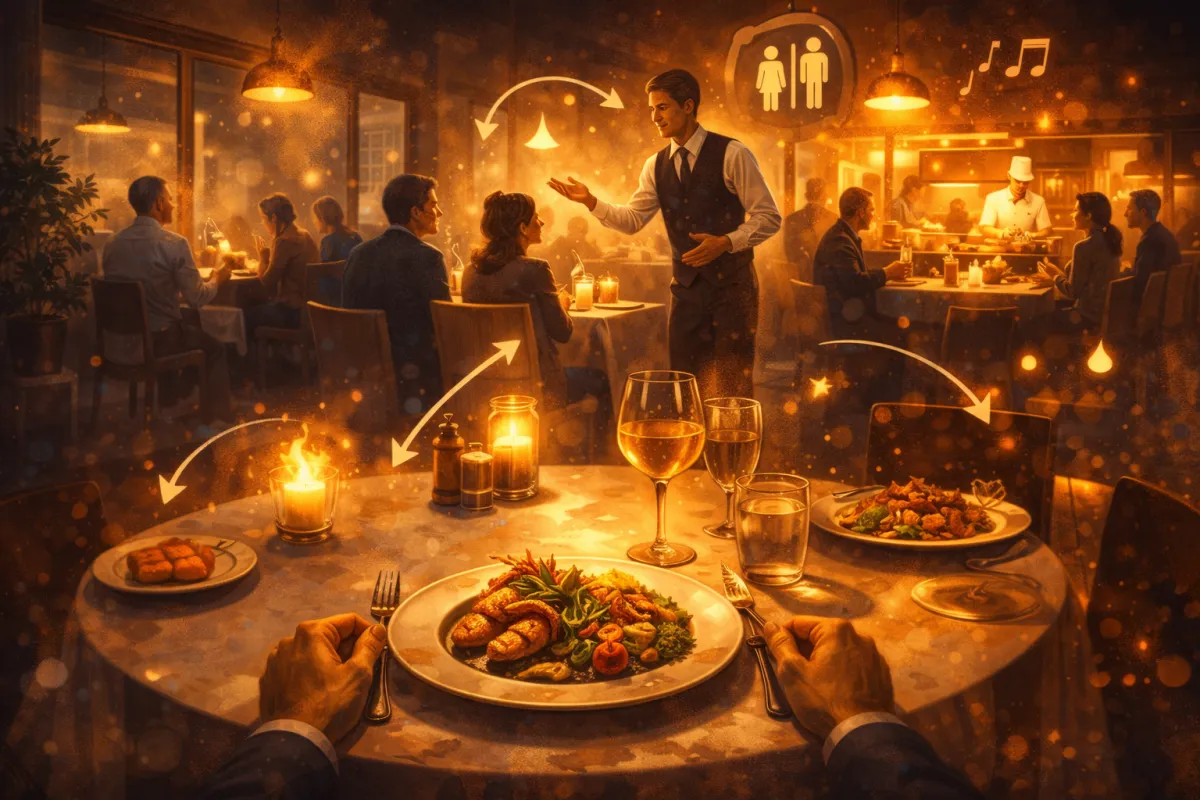
Customer Obsession Is the Number One Principle of Restaurant Marketing: Every Touchpoint Matters
Every experience is different in the customer's eyes.
Not your eyes. Their eyes.
From the moment you greet them at the door until the moment they leave, they are experiencing your restaurant through their own lens. Their own mood. Their own expectations. Their own stress from the day.
You do not get to decide how they feel. You only get to design the experience that shapes how they feel.
This is the most important thing in restaurant marketing that most restaurant owners never fully understand.
The Complete Customer Journey
Let me walk you through what customers actually experience.
They approach your restaurant. What do they see from outside? Is it inviting? Is it clear where to enter? Does it look like somewhere they want to be?
They walk in. Who greets them? How quickly? What words are used? What is the tone? Do they feel welcomed or processed?
They wait for a table or get seated. Is the wait comfortable? Is the seating smooth? Do they feel taken care of or forgotten?
They look around. What do they see? What do they hear? What do they smell? Does the interior design make them feel relaxed or anxious? Does the music match the mood they want?
They receive menus. How are menus presented? Are they clean? Easy to read? Does someone explain specials or just drop menus and disappear?
They order. Does the server listen? Do they get recommendations? Does the server seem knowledgeable and helpful or rushed and indifferent?
They wait for food. What happens in between? Do they have drinks? Is the atmosphere pleasant? Are they comfortable?
They need the bathroom. What do they find? Is it clean? Is it designed with care? Or does it feel like an afterthought that makes them question the kitchen?
Food arrives. How is it presented? Does the server explain anything? Is timing right? Is everything they ordered there?
They eat. Are they interrupted constantly or given space? Does someone check in at the right moment? Do they feel rushed or relaxed?
They order more. Dessert? Drinks? Is the process smooth? Do recommendations feel genuine or like upselling?
They pay. Is the bill accurate? Is payment easy? Does the server seem grateful or just ready for them to leave?
They leave. Does anyone thank them? Say goodbye? Make them feel like their visit mattered?
Every single one of these moments shapes how customers feel about your restaurant. Every single one affects whether they come back and what they tell others.
Seeing Through the Customer's Lens
As a restaurant owner, you have to see your restaurant through the customer's eyes.
Not your eyes. You are here every day. You are blind to things customers notice immediately.
Not your staff's eyes. They are focused on tasks and operations. They do not experience the restaurant as a guest.
The customer's eyes. Fresh. Expecting. Judging every detail whether they realize it or not.
This shift in perspective is how you protect and truly value your brand.
Your brand is not your logo. It is not your menu design. It is not your Instagram page.
Your brand is how customers feel when they experience your restaurant. Every touchpoint either strengthens or weakens that feeling.
When you see through the customer's lens, you notice what they notice. The small details that delight. The small annoyances that frustrate. The moments that feel special. The moments that feel careless.
This is how you build a restaurant worth talking about.
You Should Not Need to Watch Customers
Here is something that might sound strange.
If your experience is designed well, you should not need to study customer behavior constantly.
You should not need to watch their faces to see if they are happy. You should not need to analyze their body language to know if something is wrong.
Because you already know.
You know because you designed every touchpoint with intention. You know because you have experienced your own restaurant as a customer would. You know because you would feel awesome going through the experience you created.
When the experience is right, you do not need to guess how customers feel. You know they feel good because you built it that way.
This is confidence that comes from doing the work upfront. From thinking through every moment. From caring about details most restaurants ignore.
Restaurants that constantly scramble to read customer reactions are restaurants that have not done this foundational work. They are reacting instead of designing. Fixing instead of preventing.
Understanding the Customer's Stress
Here is something most restaurant owners forget.
Going to a restaurant is stressful for many customers.
They had to decide where to eat. That took mental energy.
They had to coordinate with others. Schedules. Preferences. Dietary needs.
They had to travel there. Traffic. Parking. Finding the location.
They had to leave their comfortable home. Get dressed. Make an effort.
By the time they walk through your door, they have already done work just to get there.
Now they arrive and their brain is still processing. Where do I go? Who do I talk to? What are the rules here? Will I be judged for not knowing the menu?
This low-level stress exists even for happy customers excited about dinner. It is just how humans work in unfamiliar environments.
Your job is to dissolve that stress immediately.
The greeting should make them feel expected and welcomed. The seating process should require no thinking from them. The atmosphere should tell their nervous system it is safe to relax.
When you understand that customers arrive with stress, you design experiences that remove it. You do not add to it with confusion or coldness or friction.
Understanding Every Viewpoint
Every customer is different.
The couple on a first date is nervous. They want to impress each other. They need the restaurant to make them look good.
The family with kids is exhausted. They want food that comes quickly. They need patience and understanding when the children are loud.
The business dinner is high stakes. They need professionalism. They need the restaurant to fade into the background while they focus on conversation.
The solo diner might feel self-conscious. They need to feel welcome alone. They need to not be treated as strange for dining by themselves.
The regulars want recognition. They want to feel known. They want small signals that their loyalty matters.
The first-time visitors are uncertain. They do not know your menu or your style. They need guidance without condescension.
You cannot treat all these customers the same way. You have to read the situation. Understand what each person needs. Deliver an experience tailored to them.
This is not manipulation. This is hospitality. This is caring enough to pay attention and respond to what each customer actually needs.
Creating a Relaxed Atmosphere
The goal of your atmosphere is simple.
Help customers relax so they can enjoy themselves.
Everything in your restaurant either adds tension or releases it. Every choice you make about music, lighting, spacing, temperature, and noise level affects how customers feel in their bodies.
Music that is too loud makes conversation difficult. Customers strain to hear each other. Their stress increases without them knowing why.
Lighting that is too harsh feels clinical. It does not invite lingering. Customers eat faster and leave sooner.
Tables too close together make people feel exposed. They whisper instead of talking. They feel watched.
Temperature too cold makes people uncomfortable. They cannot relax when their body is fighting to stay warm.
Noise from the kitchen or street that is too present makes the environment feel chaotic. Customers cannot settle.
When you get atmosphere right, customers exhale. Their shoulders drop. They sink into their seats. They stop checking the time.
This is the environment where people enjoy food. Where they have good conversations. Where they make memories. Where they decide to come back.
Service Without Interruption
One of the biggest mistakes restaurants make is interrupting customers too much.
The server who checks in every three minutes. The constant refilling of water glasses while people are mid-sentence. The clearing of plates before everyone is finished.
This might seem attentive. It is actually intrusive.
Customers came to enjoy a meal together. Not to interact with staff constantly. Not to have their conversation broken every few minutes.
The best service is invisible until needed. Present but not intrusive. Attentive but not hovering.
Watch for signals. An empty glass and a customer looking around. A finished plate pushed slightly away. A hand raised subtly. These are invitations for interaction.
Otherwise, let them experience. Let them talk. Let them enjoy the food and the company and the atmosphere you created.
Interrupting customers while they are eating is not service. It is interruption dressed as service. Customers tolerate it because they are polite. They would prefer you give them space.
Serving Not Arguing
You are here to serve customers. Not to argue with them.
This sounds obvious but many restaurant staff forget it in the moment.
A customer complains about something. The instinct is to defend. To explain why they are wrong. To protect the restaurant's reputation.
This is always a mistake.
Even if the customer is wrong, arguing makes everything worse. You might win the argument and lose the customer forever. You might win the argument and create a terrible review. You might win the argument and poison the atmosphere for everyone else in the restaurant.
Serving means accepting that the customer's experience is their reality. If they felt something was wrong, it was wrong for them. Your job is to make it right, not to prove them wrong.
This does not mean customers can abuse staff. There are lines. But complaints about food, service, or experience should be met with listening and resolution, not defense and argument.
The restaurants that understand this turn complaints into loyalty. The customer who had a problem that was handled beautifully becomes a bigger fan than customers who never had problems at all.
Customer Obsession as Marketing Strategy
Now let me connect all of this to marketing.
Being customer obsessed is the number one principle of restaurant marketing.
Not social media strategy. Not paid advertising. Not influencer partnerships. Not SEO.
Customer obsession.
Because when you are obsessed with the customer experience, marketing takes care of itself.
Customers who have amazing experiences tell others. They post on social media without being asked. They leave positive reviews. They bring friends. They become regulars. They become advocates.
This is marketing that money cannot buy. It comes only from genuine customer obsession.
You can spend thousands on advertising to bring people in. But if the experience is average, they do not come back and they do not tell anyone. The money is wasted.
You can spend nothing on advertising but create an incredible experience. Customers find you through word of mouth. Growth is slower but it is real and sustainable and profitable.
Customer obsession is the foundation. Everything else is amplification.
The Practical Application
So how do you actually become customer obsessed?
First, experience your own restaurant as a customer. Walk in the front door. Wait to be seated. Order from the menu. Use the bathroom. Pay the bill. Notice everything.
Second, ask customers directly. Not just how was everything with the server standing there. Real conversations. Feedback forms. Follow-up messages. Listen to what they say and especially what they do not say.
Third, map every touchpoint. Write down every moment from arrival to departure. For each one, ask: what could go wrong here? What would make this amazing? What do we actually do?
Fourth, train your staff on customer perspective. Help them understand not just what to do but why. Help them see through customer eyes.
Fifth, fix friction constantly. Every complaint is a gift. Every awkward moment is an opportunity. Never stop improving the experience.
Sixth, watch the best. Eat at restaurants known for incredible service. Notice what they do. Adapt it to your context.
This is ongoing work. Customer obsession is not a project you complete. It is a way of operating forever.
The Competitive Advantage
Most restaurants are not customer obsessed.
They are operationally focused. They think about efficiency and costs and processes. Customers are almost an afterthought. A source of revenue to be managed.
This creates enormous opportunity for restaurants that choose differently.
When you are genuinely obsessed with customer experience, you stand out dramatically. Customers feel the difference even if they cannot articulate it. They just know your restaurant feels better than others.
This difference compounds over time. Happy customers return more often. They bring more people. They leave better reviews. They forgive occasional mistakes. They promote you for free.
The operationally focused restaurant works hard to acquire new customers constantly. The customer obsessed restaurant builds a base of loyal customers who do the marketing for them.
Which sounds like a better business to run?
Take the Next Step
If you want to build a restaurant that customers cannot stop talking about, we should talk.
We help restaurant owners see their business through customer eyes. We identify friction points. We design experiences that create loyalty. We build marketing that amplifies what makes you special.
But it all starts with customer obsession. If you are ready to make that your foundation, let us have a conversation.
Book a call 👇 https://www.anthconsulting.com/restaurant-growth-challenge#calendar-652ZsXHqbhZk
The restaurants that win are the ones that care most about their customers. Let us help you become one of them.
Frequently Asked Questions
What does customer obsession actually mean for restaurants?
Customer obsession means designing every touchpoint of the experience from the customer's perspective. It means caring about how they feel from arrival to departure. It means making decisions based on what serves them, not just what is convenient for operations. It becomes the foundation of everything you do.
Why is every touchpoint important in the customer experience?
Every moment either strengthens or weakens how customers feel about your restaurant. A perfect meal can be ruined by a rude greeting. A mediocre dish can be forgiven if service is exceptional. Customers judge the whole experience, not just the food. Missing any touchpoint leaves value on the table.
How do I see my restaurant through customer eyes?
Experience it yourself. Walk in the front door as a guest. Wait to be seated. Order food. Use the bathroom. Pay the bill. Notice what feels good and what feels wrong. Do this regularly because you become blind to your own environment over time. Also ask customers directly and actually listen.
Why do customers arrive stressed even when they are excited to dine out?
Getting to a restaurant takes effort. Deciding where to eat, coordinating with others, traveling there, leaving home. By the time customers arrive, they have already done mental and physical work. They enter an unfamiliar environment where they do not know all the rules. This creates low-level stress even for happy customers.
How do I create a relaxed atmosphere in my restaurant?
Every design choice affects how customers feel. Music at the right volume for conversation. Lighting that is warm and inviting. Tables spaced for privacy. Comfortable temperature. Noise levels that allow people to settle. When atmosphere is right, customers physically relax. Their shoulders drop. They stop checking the time.
What is the difference between attentive service and intrusive service?
Attentive service is present but invisible until needed. Staff watch for signals that customers want interaction. Intrusive service interrupts constantly. Checking in every few minutes. Refilling glasses mid-sentence. Clearing plates before everyone finishes. Customers want to enjoy their experience, not interact with staff continuously.
How do I handle customer complaints without arguing?
Remember you are there to serve, not to win arguments. Listen to the complaint fully. Acknowledge their experience as valid. Apologize for how they felt. Offer to make it right. Even if you think they are wrong, arguing makes everything worse. Handling complaints well creates more loyalty than never having complaints at all.
How does customer obsession become a marketing strategy?
Amazing experiences create word of mouth. Customers tell friends, post on social media, and leave reviews without being asked. This is marketing money cannot buy. You can spend thousands on ads to bring people in, but if the experience is average they do not return. Customer obsession is the foundation that makes all other marketing work.
