Count the Moment. Be Present. How Indian Restaurant Owners Build Something Worth Remembering
Count the moment. Be present.
If you want to build a great Indian restaurant, you must first learn how to live inside it.
Every moment. Every detail. Every interaction.
This is not a strategy. This is not a marketing tactic. This is the foundation that everything else is built upon.
Presence.
The Seat at Your Own Table
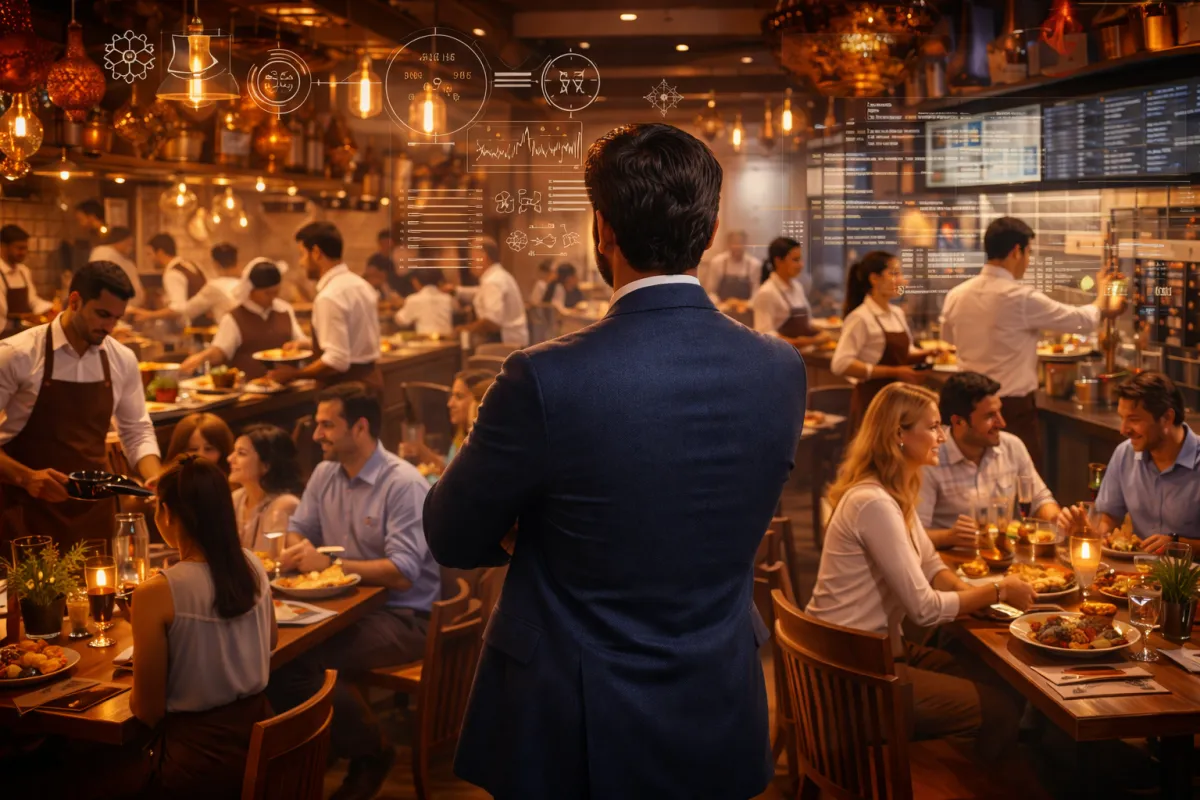
As an owner, you should be able to sit at any table in your restaurant and feel exactly what your customers feel.
The pace. The mood. The warmth. The tension. The joy.
When was the last time you did this?
Not checking on operations. Not scanning for problems. Not thinking about what needs to be done next.
Actually sitting. Actually feeling. Actually experiencing your restaurant the way a customer does.
This is harder than it sounds.
As owners, we are trained to see problems. To fix things. To manage. Our minds race through checklists even when we try to relax.
But your customers do not experience your restaurant through a checklist. They experience it through feeling.
The warmth when they walk in. The genuine smile from the host. The aroma of spices that triggers memory. The pace of service that matches their mood. The comfort that makes them stay longer than planned.
These things cannot be managed. They must be felt.
And you cannot create a feeling you do not understand.
That is why presence matters. Not as philosophy. As practice.
The Culture That Creates Flow
Great hospitality does not come from checklists alone.
Yes, you need systems. Yes, you need standards. Yes, you need training.
But the restaurants that truly shine—the ones people talk about, return to, remember—have something more.
They have a team that understands the core values of the restaurant so deeply that they do not need to be told what to do. They feel what to do.
Think about that.
When a customer has a special request, your team does not freeze waiting for permission. They respond with confidence because they know what the restaurant stands for.
When something goes wrong, they do not panic or hide. They solve it with grace because they understand the mission.
When the energy in the room shifts, they adjust without instruction because they are present to it.
This is not training. This is culture.
And culture flows from leadership.
A great leader does not micromanage. A great leader shapes culture.
They set the tone. They model the behavior. They make decisions that reinforce what matters. They hire for values, not just skills. They correct gently and praise genuinely.
When leadership is right, culture follows. When culture is right, the team moves together. When the team moves together, the restaurant enters a flow state.
And when that happens, the energy—the aura—is impossible to fake.
Customers feel it the moment they walk in. They cannot name it. But they know something is different here. Something is special.
That is the power of presence expressed through culture.
When Experience Is Right, Everything Becomes Easy
Here is what happens in restaurants that have mastered this.
Marketing feels effortless.
You do not have to convince people to come. You do not have to shout louder than competitors. You do not have to chase attention constantly.
The experience speaks for itself. Customers become advocates. Word spreads naturally.
Content creates itself.
You do not have to manufacture moments for social media. Real moments happen every day. Genuine joy. Beautiful food. Human connection. You just have to capture it.
Customers want to participate.
They take photos. They tag you. They share stories. They bring friends. They become part of your restaurant's story instead of just consumers of your product.
Offers become unnecessary.
You do not need discounts to fill tables. People come for the experience, not the price. They pay full price happily because the value is obvious.
Flyers feel outdated.
When your presence is strong online and in person, traditional tactics feel like relics. Not because they cannot work—because they are not needed.
These restaurants do not chase attention. They attract it.
And yes—every Indian restaurant owner dreams of owning a place like this.
Here is the part most people do not like to hear.
It is not rare. It is just disciplined.
The restaurants that achieve this are not lucky. They are not in better locations. They do not have secret advantages.
They simply committed to presence, culture, and experience as non-negotiable priorities. They did the work consistently. They stayed patient when results were slow.
Anyone can build this. Few actually will.
The Indian Restaurant Advantage
Indian restaurant owners have something unique.
Your cuisine is not just food. It is culture. It is heritage. It is memory and family and tradition passed through generations.
When customers visit your restaurant, they are not just eating a meal. They are experiencing something meaningful. They are connecting to something real.
This is an advantage most Western restaurants do not have.
But many Indian restaurant owners do not leverage it.
They compete on price instead of experience. They chase offers instead of building brand. They try to be everything to everyone instead of being deeply something to someone.
The spices in your kitchen tell a story. The recipes carry generations of wisdom. The hospitality embedded in Indian culture is legendary.
Why hide this? Why minimize it? Why compete like a generic restaurant when you have something no one else can replicate?
Presence means connecting to this. Culture means expressing it through your team. Experience means sharing it with every customer.
When you do this well, marketing becomes easy. Because you are marketing something real.
Why We Choose Our Clients Carefully
Getting clients is hard.
So why would we settle for the wrong ones?
From the very beginning, we made a decision. We would hand-pick the restaurants we work with.
Not because we are arrogant. But because culture, presence, and ambition matter.
We have learned that we cannot install these things from the outside. We can only amplify what already exists.
A restaurant with strong culture, present leadership, and genuine ambition? We can accelerate their growth dramatically. We can build systems that multiply what they have already created.
A restaurant without these things? No amount of marketing will save them. We would just be putting advertising behind an experience that does not deserve attention.
That is a waste of everyone's time and money.
Over time, patterns become obvious.
Some restaurants listen, implement, evolve, and grow. They stay present. They stay curious. They stay consistent. Those clients stay with us for years. Some have been with us since the very start.
Others fall back into old habits.
They ask for more offers. More flyers. More of what everyone else is doing.
They do not want to innovate. They do not want to be exceptional. They just want to participate.
Those partnerships usually last two to three months. And then we part ways—respectfully.
Because we are not here to keep businesses alive. We are here to help build restaurants worth remembering.
The Patterns We See
Let me share what we have learned from years of working with Indian restaurants.
The restaurants that succeed long-term share common traits.
They treat their team like family. Not in a soft way—in a high-standards, high-support way. They expect excellence but provide the environment for it.
They obsess over customer experience. Not in meetings. In practice. They notice the details. They fix what is broken. They enhance what is working.
They think in years, not weeks. They understand that brand building takes time. They are patient with the process while being urgent with the effort.
They stay curious. They learn. They adapt. They do not assume they know everything.
They trust experts. They hire people who know more than them in specific areas and let them do their work.
The restaurants that struggle share different traits.
They focus on price instead of value. Every conversation is about discounts, offers, deals.
They micromanage everything. They cannot let go. They suffocate their team and their partners.
They expect instant results. One month of effort should produce dramatic change. When it does not, they abandon the approach.
They resist change. What worked ten years ago should work now. New ideas feel threatening.
They distrust everyone. Every partner is suspect. Every recommendation is questioned.
We can see which category a restaurant falls into within the first conversation. And we make decisions accordingly.
A Simple Question to Sit With
Here is something I want you to try.
Today, slow down for a moment. Become fully present in your restaurant.
Not thinking about tomorrow. Not reviewing yesterday. Just here. Now. Feeling what is.
Then ask yourself one question.
What is the one thing I could fix that would raise the entire experience?
Not ten things. One thing.
Do not overthink it. The answer is usually obvious when you are present enough to see it.
Maybe it is the lighting that feels harsh. Maybe it is the greeting that lacks warmth. Maybe it is the pacing between courses. Maybe it is how the team communicates during rush. Maybe it is the music that does not match the mood.
Something will stand out. Trust it.
Recognize the pattern. Connect the dots. Simplify. Fix it. Then stay consistent.
That is it.
It is not complicated. It is just honest work done with presence.
And when you fix one thing completely, the next thing becomes obvious. Then the next. Then the next.
This is how great restaurants are built. Not through massive overhauls. Through present, consistent improvement.
The Flow State of Excellence
When everything aligns—presence, culture, team, experience—something magical happens.
The restaurant enters a flow state.
You know this feeling if you have experienced it. Even for a night. Even for a few hours.
Everything clicks. The kitchen and front of house move like a single organism. Problems get solved before they escalate. Customers feel the energy and respond to it. Tips increase. Complaints disappear. Time moves differently.
This is not luck. This is alignment.
And the goal is to make this the norm, not the exception.
Most restaurants experience flow occasionally. Great restaurants experience it consistently.
The difference is intentionality. Great restaurants design for flow. They remove friction. They build culture that supports it. They train teams to maintain it. They stay present enough to notice when it breaks and fix it immediately.
You can have this. Your restaurant can operate this way more often than not.
But it requires commitment. It requires presence. It requires honest assessment of what is blocking flow and the courage to fix it.
Marketing for Restaurants Worth Remembering
This is where we come in.
We do not do marketing for restaurants. We do marketing for restaurants worth remembering.
There is a difference.
Marketing for any restaurant is just advertising. Put offers in front of people. Hope some respond. Chase the next promotion.
Marketing for restaurants worth remembering is amplification. Take what is already special and make sure the right people experience it. Build brand that reflects the truth of who you are. Create content that captures genuine moments.
When the experience is right, our job becomes easier. We are not manufacturing appeal—we are distributing reality.
When the experience is wrong, no amount of marketing fixes it. We can bring people in the door. We cannot make them come back.
This is why we choose carefully. We want to work with restaurants where marketing can actually work. Where the foundation is solid. Where presence and culture already exist.
We make it better. We do not create it from nothing.
A Selective Invitation
If this way of thinking resonates with you—if you are building an Indian restaurant that values culture, experience, and long-term growth—we invite you to the Restaurant Growth Challenge.
It is not for everyone. And that is intentional.
We are looking for Indian restaurant owners who:
Understand that experience comes before marketing. You cannot advertise your way out of a bad restaurant.
Think in years, not weeks. Brand building takes time. You are patient with the process.
Want to be exceptional, not just survive. You are not looking for quick fixes. You are building something meaningful.
Already have something working. Good location. Good team. Revenue that allows investment. You are ready to grow, not struggling to exist.
Trust experts to do expert work. You hire people for their expertise and let them use it.
Stay present. You pay attention. You notice details. You care deeply about what you are creating.
If that describes you, we should talk.
The Restaurant Growth Challenge is how we start. Thirty days to see if we are right for each other. Real strategy. Real implementation. Real signal of whether this partnership works.
If it works, we continue for years. If it does not, you walk away without paying.
We do not promise shortcuts. We build foundations.
https://www.anthconsulting.com/restaurant-growth-challenge#calendar-652ZsXHqbhZk
Watch the video. See how we think. If it resonates, schedule a call.
Answer a few questions first so we can know you before we talk.
If you are ready to be present—and exceptional—this is where the conversation starts.
Frequently Asked Questions
What do you mean by being present in my restaurant?
Presence means experiencing your restaurant the way customers do. Sitting at a table and feeling the pace, mood, warmth, and energy—not scanning for problems or thinking about tasks. It means understanding the experience you create, not just managing operations. You cannot improve what you do not fully understand.
How does culture affect marketing success?
When culture is strong, your team creates moments worth sharing. Customers have genuine experiences that they want to talk about. Content captures reality instead of manufacturing fiction. Marketing becomes amplification of truth rather than creation of illusion. Strong culture makes every marketing dollar work harder.
Why do you say marketing becomes easy when experience is right?
Because you stop chasing attention and start attracting it. Customers become advocates. Word spreads naturally. Content captures real moments. You do not need offers to fill tables because people come for the experience. Marketing shifts from convincing to distributing.
What is the flow state of a restaurant?
Flow is when everything clicks. Kitchen and front of house move together. Problems get solved before they escalate. Customers feel the energy. Time moves differently. Great restaurants experience this consistently through intentional design—removing friction, building culture, training teams, and staying present enough to maintain alignment.
Why do you choose clients carefully instead of taking everyone?
Because culture, presence, and ambition cannot be installed from outside. We can only amplify what exists. A restaurant with strong foundation grows dramatically with our help. A restaurant without it wastes everyone's time and money. Selectivity protects both sides and produces better results.
What patterns do you see in restaurants that succeed long-term?
They treat teams like high-standards family. They obsess over experience in practice. They think in years, not weeks. They stay curious and adapt. They trust experts. The struggling restaurants focus on price, micromanage, expect instant results, resist change, and distrust everyone.
What is the one thing question you mentioned?
Slow down. Become present in your restaurant. Ask: What is the one thing I could fix that would raise the entire experience? Do not overthink—the answer is usually obvious when you are present. Fix that one thing completely. Then the next becomes clear. Great restaurants are built through present, consistent improvement.
What makes Indian restaurants uniquely positioned for this approach?
Indian cuisine is culture, heritage, memory, and tradition—not just food. Customers experience something meaningful beyond a meal. The hospitality embedded in Indian culture is legendary. When Indian restaurant owners connect to this through presence and express it through culture, they have an advantage no generic restaurant can replicate.
