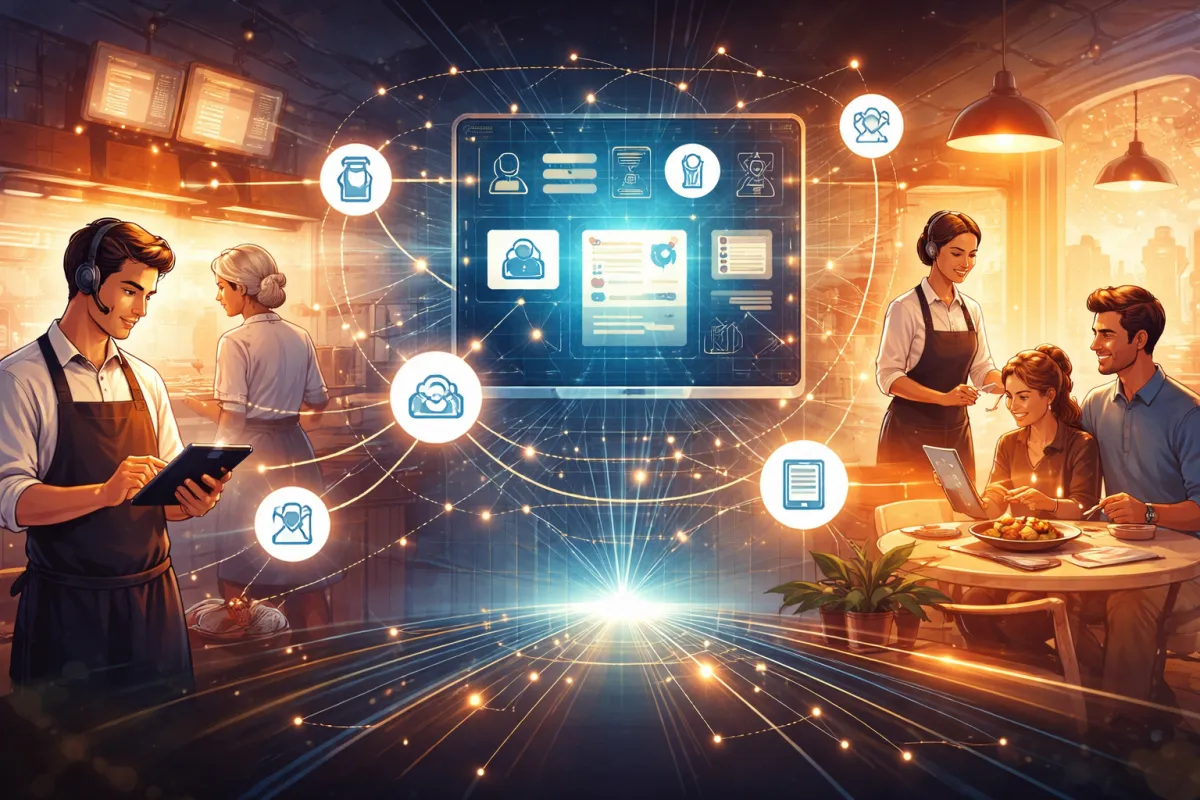
The Complete Guide to Restaurant AI: Startup Ideas, Productivity Multipliers, and the Future of Dining
AI is not coming to restaurants.
It is already here.
The question is no longer whether AI will transform the restaurant industry. That is certain. The question is who will build the tools, who will adopt them early, and who will be left behind wondering what happened.
This blog goes deep. We will explore how AI increases output across every part of restaurant operations. We will examine concrete startup ideas for both B2B and B2C markets. We will look at what can be built today, what is coming tomorrow, and what this means for restaurant owners who want to stay ahead.
If you are a restaurant owner, this will show you where to focus your attention.
If you are an entrepreneur looking for opportunities, this might be your roadmap.
Let us begin.
The Fundamental Shift
Before we talk about specific applications, we need to understand what AI actually changes.
AI is a productivity multiplier.
It takes tasks that used to require human time and either automates them completely or makes humans dramatically faster at completing them.
In restaurants, human time is the most expensive resource. Labor costs eat thirty to forty percent of revenue for most restaurants. Every minute saved, every task automated, every process streamlined goes directly to the bottom line.
But AI does more than save time.
It reduces errors. A human taking orders makes mistakes. An AI system trained properly makes fewer mistakes and learns from every correction.
It enables consistency. A human has good days and bad days. AI performs the same way every time.
It scales without proportional cost. Hiring another human doubles your labor cost for that role. An AI system serving twice as many customers costs almost nothing extra.
It works around the clock. Humans need breaks, sleep, days off. AI works twenty-four hours a day, seven days a week.
This is why AI will transform restaurants more than almost any other industry. The combination of high labor costs, repetitive tasks, and constant customer interaction creates perfect conditions for AI to add massive value.
How AI Increases Output Across Every Area
Let me walk through each part of restaurant operations and show how AI multiplies output.
Front of House Operations
The front of house is where customers interact with your restaurant. Every interaction is an opportunity to create value or lose it.
Order Taking
Traditional process: Server listens, writes on pad, walks to terminal, enters order, walks back. Time per order: three to five minutes. Error rate: five to ten percent on complex orders.
AI-enhanced process: Server listens, AI transcribes in real time, server confirms with one tap, order goes to kitchen instantly. Time per order: one to two minutes. Error rate: under two percent after training.
Output increase: Two to three times more orders processed per server hour. Fewer mistakes mean fewer remakes and comped meals.
Reservations and Phone Handling
Traditional process: Host answers phone, checks availability, takes information, enters into system. During busy periods, calls go unanswered or customers wait on hold.
AI-enhanced process: AI answers every call instantly. Handles reservations, answers common questions, takes to-go orders. Transfers to humans only when necessary. Works twenty-four hours.
Output increase: One hundred percent of calls answered. Zero hold time. Reservations taken at 3 AM. One host can now do the work of three.
Table Management
Traditional process: Host estimates wait times based on gut feeling. Sometimes wrong. Customers leave. Tables sit empty while people wait.
AI-enhanced process: AI tracks average dining time by party size, day of week, time of day. Predicts when tables will open. Gives accurate wait times. Optimizes seating to maximize table turns.
Output increase: Ten to twenty percent more covers per night through better table utilization.
Customer Service and Complaints
Traditional process: Manager handles complaints one at a time. Inconsistent responses. Some issues never get addressed.
AI-enhanced process: AI monitors reviews and feedback in real time. Drafts response templates in your voice. Flags urgent issues for immediate attention. Tracks patterns to identify systemic problems.
Output increase: Every review gets a response. Problems get identified faster. Manager time freed for high-value interactions.
Back of House Operations
The kitchen is where restaurants make or lose money. Small improvements in efficiency compound into massive profit differences.
Inventory Management
Traditional process: Someone counts inventory manually. Orders based on memory and habit. Over-ordering creates waste. Under-ordering creates stockouts and lost sales.
AI-enhanced process: AI tracks inventory automatically through POS integration. Predicts demand based on historical data, weather, local events, day of week. Generates optimal orders. Alerts when items are running low.
Output increase: Twenty to thirty percent reduction in food waste. Near-zero stockouts. Hours saved on manual counting.
Prep Planning
Traditional process: Chef estimates prep needs based on experience. Sometimes too much. Sometimes too little. Waste or scrambling.
AI-enhanced process: AI predicts covers for each day. Calculates exact prep quantities for each item. Adjusts for special events, weather, historical patterns.
Output increase: Prep is right-sized every day. Less waste. Less stress. Better food quality because nothing sits too long.
Recipe Consistency
Traditional process: Recipes live in binders or in cooks' heads. New employees learn differently. Quality varies.
AI-enhanced process: AI recipe system with exact measurements, photos, videos. Tracks modifications customers request frequently. Suggests recipe adjustments based on feedback patterns.
Output increase: Consistent food quality regardless of who is cooking. Faster training for new staff.
Kitchen Display and Timing
Traditional process: Tickets pile up. Cooks prioritize based on judgment. Some tables wait too long. Some food sits under heat lamps.
AI-enhanced process: AI kitchen display prioritizes orders intelligently. Accounts for cooking times to fire items so everything finishes together. Alerts when food is sitting too long.
Output increase: Faster average ticket times. Better food quality. Smoother kitchen flow.
Marketing and Customer Acquisition
Marketing is where most restaurants waste money. They spend without measuring. They guess instead of knowing.
Social Media Content
Traditional process: Owner or manager posts when they remember. Inconsistent quality. No strategy. No measurement.
AI-enhanced process: AI generates content ideas based on what performs. Creates captions and hashtags. Schedules optimal posting times. Analyzes results and adjusts strategy.
Output increase: Consistent posting without time investment. Better engagement through optimization. Actual ROI measurement.
Paid Advertising
Traditional process: Restaurant runs ads when they think about it. Often poorly targeted. Money wasted on people who will never visit.
AI-enhanced process: AI manages ad campaigns. Tests creative variations. Targets based on location, behavior, demographics. Optimizes spending toward what actually drives reservations.
Output increase: Same ad budget produces two to three times more customers through better targeting and optimization.
Email and SMS Marketing
Traditional process: Occasional emails when owner remembers. Generic messages to everyone. Low engagement.
AI-enhanced process: AI segments customers by behavior. Sends personalized messages at optimal times. Birthday offers, lapsed customer win-backs, new menu announcements to people who ordered similar items.
Output increase: Higher open rates. Higher redemption rates. More repeat customers without more work.
Review Management
Traditional process: Owner checks reviews when they remember. Some get responses. Many do not. Negative reviews sit unanswered damaging reputation.
AI-enhanced process: AI monitors all review platforms. Drafts responses instantly. Alerts for negative reviews requiring immediate attention. Tracks sentiment over time.
Output increase: Every review gets a response within hours. Reputation improves. Negative feedback becomes actionable insight.
Staff Management
Staff is the biggest expense and biggest headache for most restaurants. AI helps on both fronts.
Scheduling
Traditional process: Manager spends hours creating schedules. Constant requests for changes. Over-staffed slow nights. Under-staffed busy nights.
AI-enhanced process: AI predicts demand by hour. Creates optimal schedules matching staff to expected business. Handles change requests automatically. Alerts when coverage is thin.
Output increase: Hours saved on scheduling. Labor costs reduced through right-sizing. Better service through proper staffing.
Training
Traditional process: New employees shadow experienced ones. Quality of training varies. Takes weeks to get new staff productive.
AI-enhanced process: AI training system with videos, quizzes, simulations. Tracks progress. Identifies weak areas. Provides consistent training regardless of who is working.
Output increase: New employees productive faster. Consistent training quality. Less burden on experienced staff.
Performance Tracking
Traditional process: Manager judges performance subjectively. Some issues go unnoticed. Feedback is inconsistent.
AI-enhanced process: AI tracks objective metrics. Sales per hour. Order accuracy. Customer feedback mentions. Identifies top performers and struggling employees.
Output increase: Data-driven performance management. Problems addressed faster. Top performers recognized and retained.
Financial Operations
Money management determines whether restaurants survive. AI makes it less painful and more accurate.
Accounting and Bookkeeping
Traditional process: Receipts pile up. Bookkeeper enters manually. Mistakes happen. Financial picture is always weeks old.
AI-enhanced process: AI captures receipts automatically. Categorizes expenses. Reconciles accounts. Generates real-time financial reports.
Output increase: Hours saved on bookkeeping. Fewer errors. Real-time visibility into financial health.
Pricing Optimization
Traditional process: Prices set once and rarely changed. No idea if items are priced correctly.
AI-enhanced process: AI analyzes food costs, competitor pricing, demand patterns. Suggests optimal prices. Identifies items that should cost more or less.
Output increase: Higher margins through better pricing. Data-driven decisions instead of guesses.
Fraud Detection
Traditional process: Theft and fraud often go unnoticed until significant damage is done.
AI-enhanced process: AI monitors transactions for unusual patterns. Alerts on potential fraud. Tracks voids, comps, and discounts by employee.
Output increase: Fraud caught faster. Money saved. Honest employees protected from suspicion.
B2B Startup Ideas: Tools for Restaurants
Now let us get concrete. Here are startup ideas targeting restaurants as customers. Each solves a real problem and has a clear business model.
1. AI Voice Ordering System
The Problem: Restaurants miss calls during busy periods. Phone orders are slow and error-prone. Hiring dedicated phone staff is expensive.
The Solution: AI system that answers phone calls, takes reservations, handles to-go orders, and answers common questions. Integrates with existing POS systems.
How It Works: Customer calls restaurant. AI answers immediately in a natural voice. Handles the entire interaction or transfers to human when needed. Orders go directly into POS.
Business Model: Monthly subscription based on call volume. Two hundred to five hundred dollars per month for average restaurant. Premium tier for chains.
Market Size: Over one million restaurants in the US alone. If ten percent adopt at three hundred dollars per month, that is three hundred sixty million dollars annual revenue.
Competitive Advantage: Train the AI specifically for restaurant conversations. Build integrations with Toast, Square, and other major POS systems. Offer multilingual support.
Why Now: Voice AI technology has reached the quality threshold where customers cannot tell they are talking to AI. Restaurants are desperate for labor solutions.
2. Intelligent Inventory and Ordering Platform
The Problem: Restaurants waste twenty to thirty percent of food purchased. Manual inventory is time-consuming and inaccurate. Ordering is based on gut feeling.
The Solution: AI platform that tracks inventory through POS integration, predicts demand, and generates optimal orders automatically.
How It Works: Connect to POS system. AI learns what sells and when. Tracks ingredient usage per menu item. Predicts upcoming demand based on patterns, weather, events. Generates orders to maintain optimal inventory.
Business Model: Monthly subscription plus percentage of documented waste reduction. One hundred fifty to four hundred dollars base plus success fee.
Market Size: Food waste is an eight hundred billion dollar global problem. Restaurants would pay significantly to reduce it.
Competitive Advantage: The more restaurants use it, the better predictions become. Build partnerships with major suppliers for automatic ordering. Add sustainability reporting for ESG-conscious brands.
Why Now: Food costs have skyrocketed. Restaurants need every efficiency possible. Data from POS systems makes this feasible.
3. AI-Powered Staff Scheduling
The Problem: Managers spend five to ten hours weekly on scheduling. Schedules often do not match actual demand. Labor is restaurants' biggest controllable cost.
The Solution: AI scheduler that predicts demand by hour and creates optimal schedules automatically.
How It Works: Integrate with POS for historical sales data. Connect weather, local events, and holiday calendars. Learn each restaurant's patterns. Generate schedules that match staffing to predicted demand. Handle change requests and shift swaps.
Business Model: Per-employee monthly fee. Three to five dollars per employee per month.
Market Size: Restaurants employ fifteen million people in the US. Even small market share represents significant revenue.
Competitive Advantage: Build in compliance checking for labor laws. Add integration with payroll systems. Create employee app that workers actually want to use.
Why Now: Labor shortages make efficient scheduling critical. Younger workers expect app-based scheduling.
4. Review and Reputation Management Platform
The Problem: Restaurants get reviews across dozens of platforms. Responding is time-consuming. Negative reviews damage business if not addressed.
The Solution: AI platform that aggregates reviews, generates responses, and provides actionable insights.
How It Works: Connect all review platforms. AI analyzes sentiment and themes. Generates response drafts in restaurant's voice. Prioritizes negative reviews for immediate attention. Tracks reputation trends over time.
Business Model: Monthly subscription tiered by number of locations. One hundred to two hundred dollars per location.
Market Size: Every restaurant cares about reviews. Multi-location chains would pay premium for centralized management.
Competitive Advantage: Train AI on restaurant-specific language and situations. Build competitive benchmarking. Add integration with customer feedback systems.
Why Now: Reviews increasingly determine restaurant success. AI can now write responses indistinguishable from human-written ones.
5. Kitchen Display and Timing Optimization
The Problem: Kitchens are chaotic during rush. Orders get delayed. Food quality suffers when items sit. Coordination between stations is challenging.
The Solution: AI-powered kitchen display system that optimizes order flow and timing.
How It Works: Replace or augment existing kitchen display. AI calculates optimal fire times so all items for a table finish together. Predicts bottlenecks before they happen. Provides real-time guidance to kitchen staff.
Business Model: Hardware plus software subscription. One thousand to two thousand dollar setup plus one hundred to two hundred monthly.
Market Size: Every full-service restaurant could benefit. Quick service restaurants with complex menus especially.
Competitive Advantage: Build integration with major POS systems. Add predictive maintenance for kitchen equipment. Create analytics dashboard showing kitchen performance.
Why Now: Kitchen labor is scarce. Technology that makes existing staff more effective is valuable.
6. AI Marketing Assistant for Restaurants
The Problem: Most restaurant owners have no marketing expertise. They waste money on ineffective efforts. They do not have time to learn.
The Solution: AI marketing platform designed specifically for restaurants.
How It Works: Connect social accounts and ad platforms. AI generates content, manages posting schedule, runs ad campaigns, and reports results. Restaurant owner approves with one click.
Business Model: Monthly subscription based on services. Two hundred to five hundred dollars for social management. Additional for paid ads.
Market Size: Millions of restaurants need marketing help but cannot afford agencies.
Competitive Advantage: Train AI specifically on restaurant content. Build library of what works in different cuisines and markets. Offer done-for-you tiers for restaurants that want hands-off.
Why Now: AI content generation has reached quality threshold. Small restaurants can now access sophisticated marketing.
7. Dynamic Pricing and Menu Engineering
The Problem: Restaurant menus rarely change. Pricing is based on gut feeling. Profitable items are not promoted. Unprofitable items drag down margins.
The Solution: AI platform that analyzes menu performance and optimizes pricing and positioning.
How It Works: Connect to POS for sales data. Calculate true cost for each item including labor. Analyze price elasticity. Recommend optimal prices. Identify items to promote, modify, or remove.
Business Model: Monthly subscription plus success fee based on margin improvement. Two hundred base plus percentage of documented improvement.
Market Size: Every restaurant has a menu that could be optimized.
Competitive Advantage: Build benchmarking database across restaurants. Add integration with food cost tracking. Provide A/B testing framework for menu changes.
Why Now: Inflation has made margins razor-thin. Data-driven pricing is now necessary for survival.
8. AI Training and Onboarding Platform
The Problem: Training new restaurant employees is inconsistent and time-consuming. High turnover means constant retraining. Quality suffers.
The Solution: AI-powered training platform with interactive modules, video, and assessment.
How It Works: Restaurant uploads their procedures, recipes, and standards. AI creates training modules. New employees complete on their phones. AI tracks progress and identifies gaps. Quizzes adapt to focus on weak areas.
Business Model: Per-employee monthly fee. Two to four dollars per active employee.
Market Size: Fifteen million restaurant employees who all need training.
Competitive Advantage: Build library of standard training that restaurants can customize. Add certification tracking for food safety. Create manager dashboard showing team readiness.
Why Now: High turnover makes fast, consistent training essential. Mobile-first workforce expects training on their devices.
9. Predictive Maintenance Platform
The Problem: Equipment breaks at the worst times. Emergency repairs are expensive. Downtime costs money.
The Solution: AI platform that monitors equipment and predicts failures before they happen.
How It Works: Sensors connect to major equipment. AI monitors performance patterns. Detects anomalies that indicate upcoming failure. Alerts before breakdown. Connects to repair service network.
Business Model: Monthly subscription per piece of equipment. Twenty to fifty dollars per device monitored.
Market Size: Every restaurant has equipment that breaks. Prevention is worth significant premium over emergency repair.
Competitive Advantage: Build partnerships with equipment manufacturers and repair networks. Create database of failure patterns across equipment types.
Why Now: Sensor technology is cheap. AI can detect patterns humans miss. Supply chain issues make equipment replacement slow.
10. AI Catering and Events Platform
The Problem: Catering inquiries are time-consuming. Quotes require manual calculation. Follow-up is inconsistent. Revenue is left on table.
The Solution: AI platform that handles catering inquiries, generates quotes, and manages events.
How It Works: Customer submits inquiry through website or AI answers phone call. AI asks qualifying questions. Generates quote based on menu, headcount, requirements. Handles follow-up. Manages event details through execution.
Business Model: Percentage of catering revenue booked through platform. Five to ten percent of booked revenue.
Market Size: Catering is high-margin business that most restaurants underutilize.
Competitive Advantage: Build integration with calendar and kitchen capacity. Add contracts and payment processing. Create customer database for repeat business.
Why Now: Catering is growing. Restaurants want the revenue but lack systems to capture it efficiently.
B2C Startup Ideas: Tools for Restaurant Customers
Now let us look at the other side. Tools that serve customers and create value in the restaurant ecosystem.
1. AI Dining Concierge App
The Problem: Finding the right restaurant is overwhelming. Reviews are unreliable. Recommendations are generic.
The Solution: AI-powered app that learns your preferences and recommends restaurants perfectly matched to what you want right now.
How It Works: User shares preferences, past dining experiences, and current context. AI recommends restaurants based on cuisine, price, location, vibe, dietary needs. Learns from feedback. Gets smarter over time.
Business Model: Free for users. Restaurants pay for premium placement and booking integration. Five to fifteen dollars per reservation.
Market Size: Everyone eats out. Even small market share of dining decisions is massive.
Competitive Advantage: Build the best preference learning system. Partner with restaurants for exclusive offers. Add social features for group decisions.
Why Now: AI can now understand nuanced preferences. People are tired of scrolling through generic review sites.
2. Real-Time Wait Time and Table Availability
The Problem: You want to eat somewhere but do not know if there is a wait. Calling takes time. Often wrong.
The Solution: App showing real-time wait times and table availability at restaurants nearby.
How It Works: Partner with restaurants to access table management data. Or use anonymized phone data to estimate crowding. Show users current waits at nearby options.
Business Model: Free for users. Restaurants pay for listing and to push offers during slow times.
Market Size: Every diner has experienced the frustration of unexpected waits.
Competitive Advantage: Build the largest restaurant network. Add remote waitlist joining. Offer analytics back to restaurants.
Why Now: Integration APIs exist. Users expect real-time information.
3. AI Menu Translator and Dietary Assistant
The Problem: Menus at ethnic restaurants are confusing. Dietary restrictions are hard to navigate. Allergy information is inconsistent.
The Solution: App that scans menus and provides instant explanations, dietary filtering, and allergy information.
How It Works: User points camera at menu. AI recognizes items and provides descriptions, ingredients, and dietary tags. Filters based on user's restrictions. Suggests modifications.
Business Model: Freemium. Free basic features. Premium subscription for detailed nutrition, custom dietary profiles.
Market Size: Millions of people with dietary restrictions or food curiosity.
Competitive Advantage: Build the largest menu database. Partner with restaurants to provide accurate information. Add translation for international menus.
Why Now: Camera AI and menu understanding have reached necessary quality.
4. Social Dining and Group Coordination
The Problem: Organizing group dinners is painful. Coordinating schedules, preferences, and decisions takes forever.
The Solution: App that makes group dining decisions easy.
How It Works: Create a group. Each person adds preferences, availability, and restrictions. AI finds restaurants that work for everyone. Handles voting. Makes reservation. Splits the bill.
Business Model: Free for users. Commission on reservations. Premium features for frequent users.
Market Size: Every group dinner is a coordination nightmare someone would pay to solve.
Competitive Advantage: Build the smoothest group experience. Add integration with calendars and payment apps. Create social features for regular dining groups.
Why Now: People are eating out more socially. Digital-native users expect app solutions.
5. Restaurant Loyalty Aggregator
The Problem: Every restaurant has its own loyalty program. Wallets full of cards. Apps never used. Points never redeemed.
The Solution: Single app that aggregates all your restaurant loyalty programs.
How It Works: Link loyalty accounts or let AI track receipts. See all points and rewards in one place. Get alerts when close to rewards. Discover new programs worth joining.
Business Model: Free for users. Restaurants pay for promotion and user acquisition.
Market Size: Billions of dollars in loyalty points go unredeemed every year.
Competitive Advantage: Build the largest restaurant network. Add smart recommendations based on points and preferences. Partner with credit cards for receipt tracking.
Why Now: Loyalty programs are everywhere but fragmented. Consolidation creates value.
6. AI Food Photography and Review Assistant
The Problem: People want to share food photos but take mediocre pictures. Reviews take time to write. Most diners never share feedback.
The Solution: App that helps users take better food photos and generates review drafts from simple prompts.
How It Works: Camera mode with AI composition suggestions and auto-enhancement. After meal, answer a few quick questions. AI generates review draft for any platform.
Business Model: Freemium. Free basic features. Premium filters and unlimited reviews.
Market Size: Hundreds of millions of food photos shared daily.
Competitive Advantage: Build the best food photography AI. Partner with review platforms. Create social features for food lovers.
Why Now: AI image enhancement and text generation are both mature.
7. Last-Minute Reservation Deals
The Problem: Restaurants have empty tables they would fill at a discount. Diners would go out more if they got deals.
The Solution: App showing last-minute availability with discounts.
How It Works: Restaurants list unsold tables with discounts. Users browse and book. Dynamic pricing based on how close to mealtime.
Business Model: Commission on booked reservations. Higher commission for higher discounts.
Market Size: Billions in potential dining that does not happen due to price or availability uncertainty.
Competitive Advantage: Build network of participating restaurants. Add flash deals for very last-minute. Create prediction for when deals will appear.
Why Now: Post-pandemic dining habits are more spontaneous. Dynamic pricing is understood and accepted.
8. Virtual Queuing and Pre-Order Platform
The Problem: Waiting in line wastes time. Ordering at counter is slow. Mobile ordering is clunky at most restaurants.
The Solution: Platform that lets customers join virtual queues and pre-order before arriving.
How It Works: User joins queue from anywhere. App shows real-time wait. User pre-orders while waiting. Arrives as table and food are ready.
Business Model: Free for users. Restaurants pay monthly subscription or per-transaction fee.
Market Size: Every restaurant with waits could benefit.
Competitive Advantage: Build the best queue prediction. Add integration with restaurant POS. Create premium experience that customers request.
Why Now: Consumer expectations for convenience have permanently shifted.
9. AI Sommelier and Beverage Pairing
The Problem: Wine lists are intimidating. Beverage pairing is a mystery. Servers do not always know.
The Solution: App that recommends beverages based on what you are eating and your preferences.
How It Works: Input your dishes and taste preferences. AI recommends wine, beer, cocktails, or non-alcoholic options. Explains why each pairing works. Learns your palate over time.
Business Model: Freemium for consumers. B2B licensing to restaurants for in-app integration.
Market Size: Wine and beverage sales are high-margin. Better pairing increases sales.
Competitive Advantage: Build the largest pairing database. Partner with wineries and distributors. Create educational content that builds trust.
Why Now: AI can now provide genuinely useful pairing advice. Consumer interest in beverages is high.
10. Restaurant Carbon Footprint Tracker
The Problem: Environmentally conscious diners want to know the impact of their choices. No easy way to compare restaurants.
The Solution: App that estimates and tracks the carbon footprint of your restaurant meals.
How It Works: Log meals or connect to receipt tracking. AI estimates carbon impact based on ingredients, sourcing, and restaurant practices. Shows trends over time. Highlights lower-impact options.
Business Model: Freemium for consumers. Premium sustainability certification for restaurants.
Market Size: Growing segment of environmentally conscious diners willing to pay premium.
Competitive Advantage: Build the most credible methodology. Partner with sustainability organizations. Create restaurant certification program.
Why Now: Climate awareness is mainstream. Younger diners care deeply about impact.
Implementation Reality Check
Ideas are easy. Execution is hard. Here is what actually matters for building these businesses.
For B2B Restaurant Tools
Integration is everything. Restaurants will not adopt tools that do not connect to their existing systems. Building Toast, Square, and Clover integrations should be day one priority.
Sales is expensive. Restaurant owners are busy and skeptical. They get pitched constantly. Expect high customer acquisition costs. Plan for it.
Churn is real. Restaurants fail. Owners change. Budgets get cut. Build for retention from the start.
Support is demanding. Restaurant owners need help at weird hours. They are not tech-savvy. Build support into your cost model.
Start with one segment. Quick service is different from fine dining is different from fast casual. Pick one and nail it before expanding.
For B2C Consumer Tools
Distribution is the challenge. Getting consumers to download another app is extremely difficult. Consider starting as a feature within existing platforms.
Monetization takes time. Consumer apps often need scale before revenue. Plan for longer runway.
Network effects matter. The more restaurants and users, the more valuable the platform. Focus on density in specific markets before expanding.
Retention is hard. People download apps and forget them. Build habits through notifications, rewards, and genuine value.
Data is the moat. The more you learn about preferences and behavior, the better your recommendations. Protect and leverage your data advantage.
The Opportunity Is Now
Restaurant technology is being rebuilt from the ground up.
The old systems were designed before AI existed. They were designed for a world with different labor economics, different consumer expectations, different technology capabilities.
Everything is changing.
The entrepreneurs who build the next generation of restaurant technology will create enormous value. For themselves. For restaurant owners. For diners.
The restaurant owners who adopt these tools early will have advantages their competitors cannot match. Lower costs. Better service. More customers. Higher profits.
The time to act is now.
If you are building in this space, the market is ready for you.
If you are a restaurant owner, the tools are ready for you.
Take the Next Step
We help restaurants navigate this changing landscape.
We understand where technology is going. We know what tools exist today. We can help you figure out what to adopt, when to adopt it, and how to implement it without disrupting your operations.
Book a call and let us talk about your restaurant's future.
https://www.anthconsulting.com/restaurant-growth-challenge#calendar-652ZsXHqbhZk
The restaurants that thrive in the next decade will be the ones that embrace AI as a partner, not a threat. Let us help you be one of them.
Frequently Asked Questions
How much can AI really increase restaurant productivity?
Depending on the application, AI can increase output by two to ten times for specific tasks. Order taking becomes twice as fast. Phone calls get answered one hundred percent of the time. Scheduling takes minutes instead of hours. The cumulative effect across all operations can transform profitability.
What is the best first AI tool for a restaurant to adopt?
Start where you have the biggest pain point. If you miss phone calls during rush, AI voice answering. If scheduling consumes hours, AI scheduling. If food waste is killing margins, AI inventory. Quick wins build confidence for broader adoption.
How much do these AI tools typically cost?
Most B2B restaurant AI tools range from one hundred to five hundred dollars per month. Some charge per transaction or per employee. The ROI typically exceeds cost within the first few months through labor savings, reduced waste, or increased revenue.
Will AI replace restaurant workers?
AI will change restaurant jobs more than eliminate them. Tasks will shift from repetitive work to higher-value activities. Servers spend less time at terminals and more time with guests. Managers spend less time on scheduling and more time on leadership. Total employment may stay similar but composition will change.
What B2B startup opportunity has the biggest market?
AI voice ordering likely has the largest immediate market. Every restaurant has a phone. Most miss calls. The technology works today. Integration is straightforward. The pain is universal and acute.
What B2C startup opportunity has the best chance of success?
AI dining recommendation has massive potential but requires significant scale. More achievable near-term: last-minute reservation deals, which has clear value exchange for restaurants and diners and does not require massive network effects to start.
How do I know if a restaurant AI tool is legitimate?
Look for integration with major POS systems. Ask for case studies with specific metrics. Request a pilot period with defined success criteria. Be skeptical of claims that seem too good to be true. The best tools have clear, measurable ROI.
When will AI transform the restaurant industry?
It is already happening. Adoption will accelerate over the next three to five years. By 2030, AI-assisted operations will be standard for successful restaurants. The transformation is not future. It is present.
