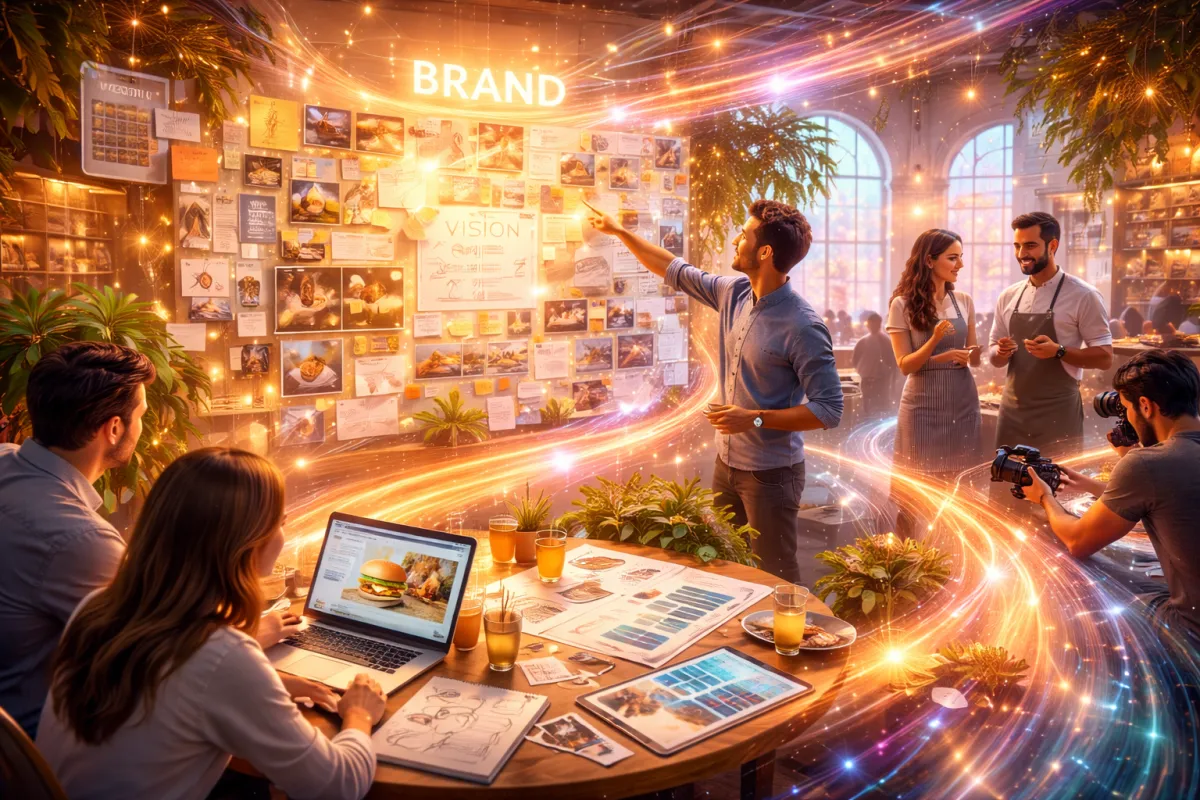
The Power of Personal and Restaurant Branding for Restaurant Owners
Building a brand is something that happens authentically, without realizing it.
You start something for a reason. You feel so in love with it that you do the best in your ability to make it the best. You want others to feel what you feel. You want to influence them to desire it too.
This is how every great brand begins. Not with a marketing strategy. Not with a logo design. With passion. With purpose. With something real that you cannot fake.
The restaurants that build powerful brands are the ones where the owner started with genuine love for what they were creating. That love shows up in every detail. Customers feel it even if they cannot name it.
Personal Brand vs Business Brand
Let me explain something important.
Personal branding and business branding are two different things. But you can use the same approach for both, just in different ways.
The psychological impact is different.
Personal brand: People have an emotional connection to another human being. They follow the person. They care about everything that person does. They feel like they know them. When you have a personal brand with a big following and community, monetizing becomes much easier. People buy from people they trust and like.
Business brand: This is a place that sells something. Your whole purpose is to sell things to keep the business going and growing. People are your trust factor. You need proof, trust, desire, satisfaction, and other people to validate the brand on a consistent basis.
For a business brand, you must show things in a beautiful way to make people remember something about you. Your logo. Your design. Your food. Your ambiance. Your service. Every touchpoint matters.
Here is where it gets interesting.
Some restaurants capitalize on having an owner or chef with a huge personal brand. This is a powerful strategy. The personal brand feeds the business brand. The business brand gives the personal brand a platform.
Think about the restaurants you admire most. How many of them have a chef or owner who is known? Whose personality is part of the experience?
This connection is not an accident. It is strategy.
The Team as Part of the Brand
Here is something most restaurant owners miss.
It is a huge benefit to show your team online. Not just the owner. The servers. The chefs. The hosts. The people who create the experience every single day.
Why?
Because for a restaurant, it is all about the experience. And experiences are created by people, not buildings.
When you showcase yourself and your team talking, doing things, being themselves consistently—something powerful happens. The viewers who become customers feel like they already know you. They have seen you. They feel comfortable around you before they even walk in.
This is the goal.
We want the customer to feel like home even though they visit for just one or two hours.
Think about that. They are in your space for maybe ninety minutes. How do you create a feeling of home in ninety minutes?
By making them feel like they already know the people serving them. By creating familiarity before they arrive. By showing the human side of your restaurant consistently online.
When a customer walks in and recognizes the server from Instagram, something shifts. The guard comes down. Trust goes up. The experience becomes more personal.
This is the power of combining personal branding with business branding.
Understanding the Creator: You
There is power behind building a brand. But before you can build anything external, you need to understand everything internal.
You need to understand the person creating this. You.
What is your obsession? What is your mission? What is your purpose? What are you passionate about?
Learn to speak about it. Learn to speak for it. Know what you love. Know your interests. Know your story.
And be ready to pivot when something is not working.
The best brands are built by people who know themselves deeply. Who understand why they started. Who can articulate what makes them different.
If you do not understand yourself, you cannot build an authentic brand. You will build something generic. Something forgettable. Something that looks like everyone else.
The market does not need another restaurant. The market needs YOUR restaurant. The one only you can build because only you have your specific combination of passion, experience, taste, and vision.
The Double Work Worth Doing
Building both a personal brand and a restaurant brand might feel like a lot of work.
It is.
It might feel personal in the beginning. It might feel vulnerable. It might feel like more than you signed up for.
But if I had to choose one to build first today, I would choose the personal brand.
Why?
Because a personal brand travels with you. If one restaurant fails, your personal brand remains. If you open another location, your personal brand multiplies its impact. If you want to do something entirely different in ten years, your personal brand adapts.
A business brand is tied to the business. A personal brand is tied to you.
But here is the real answer: you need both.
Create a vision for both your personal brand and your restaurant brand. Strive to make both work together. Because sometimes you just have to work double.
And here is the good news.
AI is here to help you now.
People did not have this a few years ago. And they still built personal brands and businesses together. They did it with more effort, more time, more struggle.
You have tools they did not have. You can create content faster. You can automate tasks. You can multiply your effort in ways that were not possible before.
Of course, experts play a huge factor in this. But you have to set the ground before the experts come in. Get the ball rolling. Feel it. Understand it. Then bring in people who can help you develop and improve it.
Finding the White Space
In every industry there is white space to be discovered.
Ideas that have not been executed. Innovations that have been thought about but not built. Opportunities hiding in plain sight.
Use your creativity to just be yourself. You will be surprised how many good ideas you create just by letting it flow.
The best innovations come from someone saying "why does it have to be this way?" and then doing something different.
Use feedback to see if you should keep going or adjust. The market will tell you if your idea has legs. Listen to it.
White space is not about inventing something completely new. It is about seeing what everyone else misses. About combining things in ways others have not. About serving people others ignore.
Later in this post, I will share specific white space opportunities in the restaurant industry right now. Opportunities backed by data. Opportunities you can explore for your own restaurant.
Surround Yourself With Great People
Make sure you surround yourself with great people.
People who inspire you to get better. People who are good. People with positive attitudes. People who give you energy. People who flourish and help you flourish.
And yes, I also mean your team.
Hiring is not just about skillset. It is about what type of person they are. This plays a huge factor in everything.
Creating a culture in the restaurant is a big factor for everyone to want to participate in things—or not. It is the same in life. You want to be around great people. People who inspire you.
No man has ever built wealth as a lone wolf.
Wealth is built with a tribe of lions and kings.
Your team is your tribe. Choose them wisely. Not just for what they can do, but for who they are.
The energy of your team becomes the energy of your restaurant. The culture you create with your people becomes the experience your customers feel.
This is not soft thinking. This is strategy. The right people multiply everything good. The wrong people divide it.
The Vision Board Task
Now let me give you something practical.
I want you to create a vision board that serves both your personal brand and your restaurant brand.
This is not fluffy motivation. This is clarity. When you can see what you are building, you build it faster and with more focus.
How to Create Your Dual Vision Board
Step 1: Divide the board into two halves
Left side: Personal Brand Right side: Restaurant Brand
Step 2: Personal Brand Section
Answer these questions and add images, words, or phrases that represent your answers:
Who am I beyond the restaurant?
What do I want to be known for?
What values do I want to embody publicly?
What does my ideal audience look like?
What platforms will I show up on?
What content will I create?
What story am I telling?
Where do I want this personal brand to take me in 5 years?
Example elements for personal brand vision:
Photo of yourself in your element (kitchen, hosting, creating)
Words like "trusted," "authentic," "leader," "innovator"
Images of people you admire and want to be like
Screenshots of the platforms you want to dominate
Pictures representing your lifestyle goals
Quotes that capture your philosophy
Numbers representing followers, impact, opportunities you want
Step 3: Restaurant Brand Section
Answer these questions and add visual representations:
What feeling do we create for customers?
What do we want people to say about us?
What makes us different from every other restaurant?
What does our ideal customer look like?
What does success look like visually?
What awards or recognition do we want?
What does expansion look like?
How do we want the community to see us?
Example elements for restaurant brand vision:
Photos of your best dishes
Images of the ambiance you want to create or enhance
Words like "home," "celebration," "authentic," "unforgettable"
Pictures of full dining rooms, happy customers
Media logos where you want to be featured
Images representing community involvement
Design elements that capture your brand aesthetic
Pictures of the team culture you want to build
Step 4: Find the Overlap
In the center of the board, identify where personal and restaurant brand connect:
How does your personal story connect to the restaurant's story?
How does your personality show up in the customer experience?
What values exist in both your personal brand and restaurant brand?
How can content serve both brands simultaneously?
This overlap is your power zone. Content and efforts here multiply across both brands.
Vision Board Examples
Example 1: The Heritage Chef
Personal brand side: Images of grandmother cooking, family recipes, cultural pride, food media appearances, cookbook dreams
Restaurant brand side: Authentic Indian cuisine, family recipes served to community, warm hospitality, cultural education through food
Overlap: Family heritage expressed through restaurant, personal story of immigration and food memories, content showing both personal journey and restaurant mission
Example 2: The Local Champion
Personal brand side: Community leader, local food advocate, supporter of local farms, voice for small business owners
Restaurant brand side: Farm-to-table commitment, community gathering space, local supplier partnerships, neighborhood institution
Overlap: Personal advocacy for local food systems expressed through restaurant sourcing and messaging, content featuring both personal visits to farms and restaurant dishes made from local ingredients
Example 3: The Innovation Pioneer
Personal brand side: Tech-forward thinker, industry disruptor, speaker at food conferences, thought leader in restaurant innovation
Restaurant brand side: Cutting-edge dining experience, technology-enhanced service, unique concepts, trendsetter in the market
Overlap: Personal expertise in innovation expressed through restaurant experiments, content showing both thought leadership and practical application
White Space Opportunities in the Restaurant Industry
Now let me share specific opportunities backed by current research. These are areas where demand is growing but supply has not caught up. Blue ocean spaces where you can differentiate.
1. Solo Dining Experience
The Data: Solo dining reservations are up 29% in the US over two years. 52% of Americans plan to dine solo. Solo diners spend 48% more per person than average diners, with average checks around $84-94.
The White Space: Most restaurants still treat solo diners as an afterthought. Awkward seating. Removed place settings that highlight being alone. Staff who seem confused by a party of one.
Blue Ocean Ideas:
Create a dedicated solo dining experience with chef's counter seating
Design intimate spaces specifically for one that feel luxurious, not lonely
Offer solo-specific tasting menus at smaller portions and prices
Train staff specifically on solo diner hospitality
Market yourself as a solo dining destination
Create a reading nook or library area for solo diners who want atmosphere
Offer communal tables that allow solo diners to connect if desired
2. Non-Alcoholic Beverage Program
The Data: Non-alcoholic cocktail sales are up 350% year over year. Non-traditional beverage choices are seeing 35% growth. Traditional soda is declining while creative alternatives rise.
The White Space: Most restaurants offer water, soda, or maybe one mocktail as an afterthought. The sober-curious and health-conscious market is underserved.
Blue Ocean Ideas:
Create an extensive non-alcoholic cocktail menu with same creativity as alcohol menu
Develop house-made sodas, lemonades, and specialty drinks
Offer non-alcoholic pairings with tasting menus
Source interesting non-alcoholic wines and beers
Train bartenders to craft mocktails with same care as cocktails
Market your NA program specifically to attract this growing demographic
Create a "zero-proof happy hour" with discounted mocktails
3. Early Evening Dining
The Data: Early evening dining (4-7 PM) is a key growth area. Happy hour interest is surging. Diners are looking for value and experiences before traditional dinner hours.
The White Space: Most restaurants focus on the 7-9 PM rush. Early evening is often dead time with reduced staff and limited offerings.
Blue Ocean Ideas:
Create a special early evening menu with unique offerings
Develop a robust happy hour program beyond just discounts
Target the remote worker crowd who has flexibility
Offer early bird specials that feel exclusive, not cheap
Create early evening events (cooking demos, wine education)
Market specifically to the early dinner crowd
Design the early evening as a distinct experience, not just early access to regular dinner
4. Experiential and Immersive Dining
The Data: Consumers want more than meals—they want experiences. Pop-ups and collaborations are selling out. 70% of Gen Z discovers restaurants via social media, seeking share-worthy moments.
The White Space: Most restaurants offer food in a space. Few offer an experience that customers cannot get anywhere else.
Blue Ocean Ideas:
Create monthly themed dining experiences
Collaborate with other chefs for limited-time menus
Offer chef's table experiences with interaction and education
Design shareable moments into the experience intentionally
Create seasonal or holiday-specific immersive events
Partner with artists, musicians, or performers for dinner events
Develop a signature experience that becomes your calling card
5. Multifunctional Spaces
The Data: Real estate costs are high. Restaurants sit empty during off-peak hours. Co-working and community spaces are in demand.
The White Space: Most restaurants only generate revenue during meal service. The space sits unused for hours every day.
Blue Ocean Ideas:
Transform into co-working space during off-peak morning hours
Host private events and meetings during slow afternoons
Offer cooking classes when the kitchen is not in service
Create a community room for local groups to meet
Partner with yoga studios or wellness businesses for morning sessions
Rent space to photographers for food shoots
Develop a membership model for off-peak access
6. Budget Luxury
The Data: Diners seek value but still want premium experiences. "Meal deal" searches are up 117%. But quality expectations remain high.
The White Space: Most restaurants are either expensive and premium or cheap and basic. The middle space of luxury experience at accessible price is underserved.
Blue Ocean Ideas:
Create a "luxury for less" positioning with smart menu design
Offer premium ingredients in smaller portions at lower prices
Design an upscale experience with efficient operations that keep costs down
Create a prix fixe menu that feels special but is priced accessibly
Focus on one or two expensive elements surrounded by affordable ones
Market the "best value fine dining" position explicitly
Offer split portions or half sizes of premium dishes
7. AI-Enhanced Personalization
The Data: AI is reshaping how restaurants operate and connect with customers. Personalized experiences drive loyalty. Data-driven decisions improve efficiency.
The White Space: Most restaurants use technology for operations but not for personalization. Customer data sits unused. Experiences remain generic.
Blue Ocean Ideas:
Use customer data to personalize recommendations
Remember preferences and dietary restrictions automatically
Send personalized offers based on dining history
Use AI to create customized menus for regulars
Implement smart loyalty programs that adapt to behavior
Personalize communication based on customer preferences
Create "your usual" ordering for frequent guests
8. Health-Conscious Customization
The Data: Diners want control over what goes into their meals. Health consciousness is increasing. Customization is expected.
The White Space: Most restaurants offer fixed dishes with limited modification. Health-conscious diners often feel like an inconvenience.
Blue Ocean Ideas:
Design menus with customization built in
Offer clear nutritional information
Create build-your-own options for health-conscious diners
Train staff to guide customers through healthy modifications
Source and highlight functional ingredients
Create partnerships with nutritionists for menu development
Market specific dietary accommodations as features, not limitations
Your Task: Identify Your Blue Ocean
Now it is your turn.
Task 1: Create Your Dual Vision Board
Using the framework above, create a vision board that serves both your personal brand and your restaurant brand. Spend at least one hour on this. Print images. Write words. Make it visual and real.
Put it somewhere you will see it every day.
Task 2: Identify Your White Space
Look at the eight opportunities above. Ask yourself:
Which of these opportunities excites me most?
Which aligns best with my personal brand vision?
Which could I realistically implement in my restaurant?
Which is no one in my local market doing well?
Which could become my differentiator?
Choose one to focus on. Just one. Do not try to do everything.
Task 3: Create Your Blue Ocean Action Plan
For the opportunity you chose, answer:
What would it look like fully implemented in my restaurant?
What is the first small step I could take this week?
Who do I need to involve to make this happen?
What resources do I need?
How will I measure success?
Write this down. Share it with someone who will hold you accountable.
The Brand You Are Building
Remember where we started.
Building a brand happens authentically, without realizing it. You start something for a reason. You feel so in love with it that you do the best in your ability to make it the best.
That love is your foundation.
Everything else—the strategy, the vision board, the white space opportunities—builds on that foundation.
Know yourself. Know your purpose. Know what you are building and why.
Then surround yourself with great people. Build your tribe of lions and kings. Create a culture that everyone wants to participate in.
Combine your personal brand with your restaurant brand. Let them feed each other. Let your personality become part of the experience you create.
And find your blue ocean. The space where you can be truly different. Where competition becomes irrelevant because you are playing a different game.
No man has ever built wealth as a lone wolf.
But with the right tribe, the right vision, and the right opportunity—you can build something extraordinary.
Join the Restaurant Growth Challenge
We help restaurant owners build both personal and business brands that work together.
Marketing. Brand. AI productivity. These are the only three things restaurants need from a marketing partner.
The Restaurant Growth Challenge shows you exactly what this looks like for your specific situation.
We get on a call. We look at where you are now. We map out what the next thirty days could look like. We show you opportunities you might be missing.
If you are ready to build something bigger than just a restaurant—a brand that lasts, a vision that inspires, a business that grows—let us talk.
https://www.anthconsulting.com/restaurant-growth-challenge#calendar-652ZsXHqbhZk
Your brand is waiting to be built. Let us build it together.
Frequently Asked Questions
What is the difference between personal brand and business brand for restaurant owners?
Personal brand is about you as an individual—your story, values, expertise, and personality. Business brand is about the restaurant—its experience, offerings, reputation, and position in the market. Personal brand creates emotional connection to a human. Business brand creates trust in a place. The best restaurant brands combine both.
Should I build my personal brand before my restaurant brand?
If you had to choose one, I would recommend personal brand first because it travels with you regardless of what happens with any specific business. However, the best approach is building both simultaneously with a clear vision for how they connect and reinforce each other.
How do I show my team online without making it awkward?
Start by creating a culture where being featured is seen as positive recognition, not a burden. Feature team members doing what they naturally do well. Let their personalities show. Do not script or force it. Consistency matters more than perfection. When customers see the same faces repeatedly, familiarity builds.
What is white space in the restaurant industry?
White space refers to opportunities that exist but are underserved—areas where customer demand exceeds current supply. These are places where you can differentiate because few competitors are focused there. Examples include solo dining experience, non-alcoholic beverage programs, early evening dining, and experiential concepts.
How do I know which blue ocean opportunity is right for my restaurant?
Choose based on three factors: alignment with your personal brand and passions, feasibility given your resources and market, and absence of strong competition locally. The best opportunity is one you are genuinely excited about that you can realistically execute and that no one else in your area is doing well.
What should be on a restaurant owner's vision board?
Include visual representations of: the feeling you want to create, your ideal customer, what success looks like, recognition you want to achieve, the team culture you want to build, design elements of your brand, and where you want to be in five years. Make it specific and visual, not just words.
How does AI help with building both brands?
AI helps you create more content faster, automate repetitive tasks, personalize customer experiences, analyze data for insights, and multiply your effort across both personal and business branding. What used to require a team can now be done by one person with the right tools.
Why does team culture matter so much for brand building?
Your team creates the customer experience. Their energy becomes your restaurant's energy. A positive team culture shows up in every interaction customers have. When you hire for character and values, not just skills, you build a tribe that naturally reinforces your brand through their behavior.
