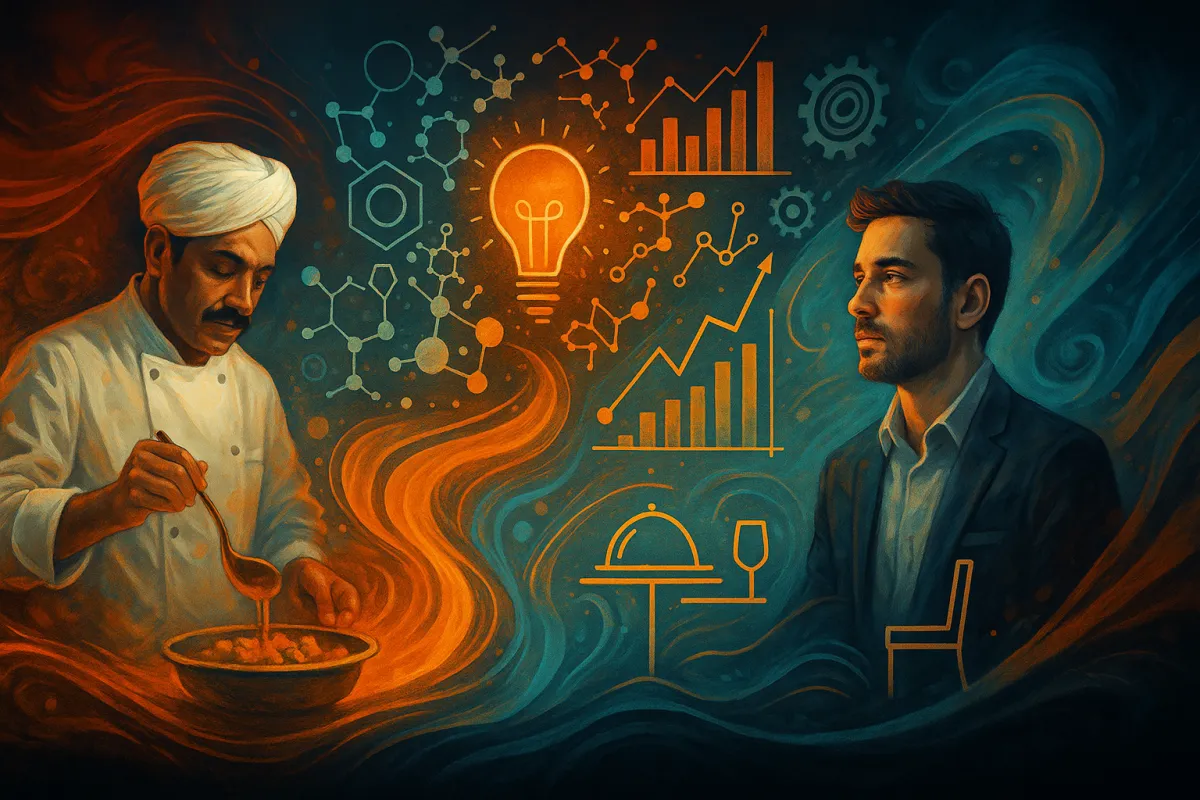
Why Successful Restaurants Fail: The Innovation Trap That Kills Profitable Businesses
The Strange Truth About Restaurant Success
Let me tell you something that sounds crazy. Sometimes the things that make your restaurant successful today are the exact same things that will make it fail tomorrow.
I know this sounds backwards. How can success lead to failure? But it's true. And it happens to restaurants all the time.
Think about it. You have a restaurant that's doing well. Customers love your food. You're making money. Everything seems fine. So you keep doing what's working. You focus on your regular customers. You perfect your popular dishes. You make small improvements to things people already like.
This sounds smart, right? This sounds like good business. But here's the problem. While you're focused on keeping your current customers happy, the world around you is changing. New types of customers are appearing. New ways of eating are emerging. New competitors are trying different things.
And one day, you wake up and realize customers are going somewhere else. Your restaurant that was successful yesterday is struggling today. What happened?
You got disrupted. And you didn't see it coming because you were too busy being successful.
Why Restaurants Should Think Like Startups
Here's something important. Every restaurant should think like a startup. Not forever. But for much longer than most restaurant owners realize.
What does it mean to think like a startup? It means you're always experimenting. Always trying new things. Always willing to change. Always looking for better ways to serve customers.
Startups have nothing to lose. They're not protecting an existing business. They're not worried about upsetting current customers. They can try crazy ideas. They can fail and try again. They can pivot completely if something isn't working.
This freedom to experiment is powerful. This is how innovation happens.
But what happens to most restaurants? They find something that works. Then they stop experimenting. They stop trying new things. They protect what they have. They become careful. They become conservative.
This is natural. This makes sense. Why risk what's working? But this is also dangerous. Because the world doesn't stop changing just because you found something that works today.
The Big Difference Between Tech Startups and Restaurants
Now, I need to be honest about something. Running a restaurant like a startup is harder than running a tech startup like a startup.
Why? Money and time.
A tech startup can raise millions of dollars. They can lose money for years while they figure things out. They can grow very fast once they find the right formula. A tech company can go from zero to a billion-dollar valuation in a few years.
Restaurants don't work this way. You can't raise millions of dollars easily. You can't lose money for years. You need to make profit much sooner. And even when you're successful, restaurant profit margins are small. Much smaller than tech company margins.
A tech company might make thirty percent profit or more. A successful restaurant might make five to ten percent profit if they're doing really well. Many restaurants make less than that.
This means restaurants have less room for error. Less money to experiment with. Less ability to try things that might fail.
But here's what I want you to understand. Just because it's harder doesn't mean it's not important. Actually, it might be more important for restaurants. Because restaurants face competition from every direction. New restaurants. Chain restaurants. Food delivery apps. Meal kits. Ghost kitchens. The threats are everywhere.
So yes, it's harder for restaurants to innovate than tech companies. But it's also more necessary.
The Two Types of Innovation
Let me teach you about two different types of innovation. Understanding these two types will help you see why successful restaurants fail.
Type One: Sustaining Innovation
This is when you make your existing products better. You improve your recipes. You make your service faster. You upgrade your restaurant interior. You perfect your popular dishes.
This type of innovation keeps your current customers happy. They already like what you do. Now you do it even better. They love you more. They come back more often. They spend more money.
Most successful restaurants focus on this type of innovation. It makes sense. Your customers are right there telling you what they want. "Make the portions bigger." "Add more spice options." "Stay open later on weekends." You listen. You improve. Everyone is happy.
Type Two: Disruptive Innovation
This is when you do something completely different. Something that doesn't serve your current customers at all. Something that might even be worse quality at first. Something that appeals to customers who aren't eating at your restaurant right now.
This sounds crazy. Why would you do something that's worse quality? Why would you ignore your current customers to chase customers who don't come to your restaurant?
But this is exactly how disruption works. Let me give you an example.
A Real Example of Disruption
Think about fast casual restaurants. Places like Chipotle or Panera. Twenty years ago, these didn't really exist. You had two choices: fast food (cheap but low quality) or sit-down restaurants (better quality but expensive and slow).
Fast casual restaurants came in with a disruptive idea. Better quality than fast food. Faster and cheaper than sit-down restaurants. When they started, they weren't as good as traditional restaurants. The food was simpler. The service was basic. Traditional restaurant owners looked at them and thought "That's not a threat. That's just glorified fast food."
But fast casual restaurants got better. And better. And better. They improved their quality. They expanded their menus. They created loyal customer bases. Now they're a huge threat to traditional restaurants.
The traditional restaurants that dismissed them? Many of them are struggling now. Or closed. Because they didn't see the disruption coming until it was too late.
Why Good Management Makes Restaurants Fail
Here's the really strange part. The restaurants that fail from disruption are often well-managed. They're not lazy. They're not incompetent. They're actually doing everything "right."
They listen to their customers. They improve their products. They focus on their most profitable offerings. They make smart financial decisions. They do exactly what business books tell them to do.
So why do they fail? Because all these "smart" things make them blind to disruption.
Let me explain how this happens step by step.
Step One: You have successful dishes
Your butter chicken is famous. Your biryani is beloved. These dishes make you the most money. They keep customers coming back.
Step Two: You invest in what's working
You perfect these dishes. You train your staff to make them perfectly every time. You buy better ingredients. You create systems around them. You market them heavily.
Step Three: Your resources get locked in
Now your kitchen is set up for these dishes. Your staff is trained for these dishes. Your suppliers provide ingredients for these dishes. Your brand is known for these dishes. Your whole business revolves around these dishes.
Step Four: New opportunities appear
Maybe there's a trend toward healthier food. Or plant-based options. Or fusion cuisine. Or a completely new way of serving food. These opportunities exist. But they don't fit your current system.
Step Five: You rationally dismiss them
You think: "That's not what our customers want. That doesn't match our brand. We don't have the right equipment. Our staff doesn't know how to make that. The profit margins would be lower. It's too risky."
All of these thoughts are rational. They make sense. They're based on real concerns.
Step Six: Someone else captures the opportunity
A new restaurant opens. Or an existing restaurant tries the new thing. At first, it's not very good. Your customers don't leave you for them. You feel validated. "See? We were right to ignore that trend."
Step Seven: The disruption improves
But that new thing gets better. The restaurant doing it learns and improves. They attract new customers. They start getting your customers too. By the time you notice, it's hard to catch up. You're locked into your old way of doing things.
This is why good management can lead to failure. You make all the "right" decisions based on your current business. But those decisions make you unable to adapt to change.
Feeling stuck in your current way of doing things? It's not too late to innovate. But you need guidance. Book a free strategy call with us to discuss where your restaurant is now and what disruptive opportunities you might be missing. We'll help you see blind spots and explore new directions without destroying what's working. Click here to book your free call - we only work with restaurants ready to think differently.
The Internal Barriers to Innovation
Even if you understand disruption intellectually, your restaurant might have internal barriers stopping you from innovating. Let me tell you what these barriers are.
Your Processes
The way you do things every day. Your recipes are written down. Your prep schedule is set. Your service flow is established. Your closing procedures are fixed. These processes make you efficient. But they also make you inflexible.
When someone suggests doing something new, the immediate thought is: "But that doesn't fit our process." And they're right. It doesn't. So you don't do it.
Your Resources
Your kitchen equipment is set up for certain types of cooking. Your staff is trained in certain skills. Your suppliers provide certain ingredients. Your space is configured a certain way.
When a new opportunity requires different equipment, different skills, different ingredients, or different space, you think: "We don't have the resources for that." And you're right. You don't. So you don't do it.
Your Values
What your restaurant stands for. What you believe is important. Maybe you value authenticity. Or tradition. Or quality above all else. These values guide your decisions.
But sometimes new opportunities conflict with your stated values. Maybe the new thing is less authentic. Or breaks with tradition. Or requires some quality compromise to hit a lower price point. So you reject it based on your values.
All of these barriers - processes, resources, values - exist for good reasons. They help you run a consistent, quality restaurant. But they also trap you. They make it nearly impossible to pursue disruptive innovation.
How to Innovate Without Destroying Your Business
So what do you do? You can't just throw away everything that's working. You can't ignore your current customers. You can't stop focusing on profitability. You still have bills to pay. Staff to manage. A business to run.
But you also can't ignore innovation. You can't just keep doing the same thing forever. You can't pretend the world isn't changing.
The answer is something called "autonomous innovation." Let me explain what this means in practical terms.
You create a small, separate part of your business to test new things. This part operates differently from your main business. It has different rules. Different processes. Different goals. Different measures of success.
Here's what this might look like in a restaurant:
Example One: A Test Menu Section
You keep your regular menu. But you add a small "chef's experiments" section. Maybe just two or three dishes. These dishes can be different from your usual offerings. They can target different customers. They can test new ingredients or techniques.
You tell customers these are experiments. Some will stay. Some will change. Some will fail. People actually love being part of the experiment. It makes them feel special.
This lets you test disruptive ideas without risking your core business. If something works, great. If it doesn't, you just remove it. Your main menu stays safe.
Example Two: Special Event Nights
Pick one slow night per week. Maybe Monday or Tuesday. Do something completely different that night. Maybe it's fusion food night. Maybe it's plant-based night. Maybe it's street food night.
This attracts different customers than your usual crowd. It tests different concepts. It uses your existing space and staff, but with different rules for that one night.
If the special night becomes popular, you learned something valuable. If it doesn't work, you stop doing it. Either way, your regular business continues unchanged.
Example Three: Limited Time Offers
Introduce something new for just two weeks or a month. Make it clear it's temporary. This creates urgency. People try it because they know it won't be around forever.
This lets you test market response to disruptive ideas without committing long-term. You learn what works. What people like. What they're willing to pay for. Then you use that knowledge to make better decisions.
Example Four: A Pop-Up or Second Location
If you want to test something really different, consider a pop-up concept. Or if you're doing well, a small second location with a different concept.
This is the most expensive option. But it completely separates the innovation from your main business. The pop-up or second location can have different branding, different menu, different everything. If it fails, your main restaurant is protected. If it succeeds, you just found a new growth opportunity.
The key principle in all these examples is the same: separate the innovation from the core business. Give it space to operate differently. Don't force it to follow all the same rules.
Understanding Your Different Customers
Here's something most restaurant owners don't think about enough. Not all customers are the same. Not all customers want the same thing. Not all customers should be served the same way.
Let me tell you about different types of customers:
Your Core Customers
These are your regulars. They come often. They know your menu. They have favorite dishes. They appreciate what you do. They're probably very similar to each other in terms of taste and preferences.
Most restaurants focus almost entirely on this group. Which makes sense. These are your most valuable customers. But focusing only on them makes you blind to everyone else.
Non-Customers You Could Serve
These are people in your area who could eat at your restaurant but don't. Why don't they? Maybe they think you're too expensive. Maybe they don't like spicy food and they think all Indian food is spicy. Maybe they're vegan and don't think you have options for them. Maybe they want faster service than you offer.
These people represent huge opportunity. But serving them might require changes that your current customers don't care about or might even dislike. This is exactly where disruption lives.
Future Customers
These are people whose preferences are changing. Maybe younger people who grew up with different food experiences. Maybe health-conscious people looking for nutritious options. Maybe people who want convenience above everything else.
These customers don't fit your current model. But in five years, they might be the majority. If you don't start serving them now, you won't be positioned to serve them later.
The Questions You Should Be Asking
Most restaurants ask: "What do our customers want us to improve about our current offerings?"
This leads to sustaining innovation. Better versions of what you already do. Which is fine. But it's not enough.
You should also be asking completely different questions:
"Who isn't eating at our restaurant and why?"
"What would make someone choose us who currently never considers us?"
"What are we bad at that we could be good at?"
"What would our restaurant look like if we started from scratch today?"
"What are younger customers doing differently than older customers?"
"What trends are we dismissing that might actually matter?"
"If we weren't afraid of failure, what would we try?"
These questions open up possibilities. They help you see opportunities you're currently blind to. They force you to think beyond your current customer base.
Why This Matters for Indian Restaurants Specifically
If you own an Indian restaurant, you face specific challenges around disruption and innovation.
Indian cuisine has a rich tradition. Authentic recipes passed down through generations. This is beautiful. This is valuable. Your customers appreciate this authenticity.
But this tradition can also trap you. You might feel like you can't change anything without betraying the cuisine. You might resist fusion ideas or modern adaptations because they feel inauthentic.
Meanwhile, other restaurants are innovating. Creating Indian-fusion concepts. Making Indian food more accessible to non-Indian customers. Adapting recipes for different dietary preferences. Using Indian flavors in unexpected ways.
Some of these experiments fail. Some succeed. The ones that succeed are capturing customers you could have had.
You don't have to abandon tradition to innovate. You can honor tradition while also experimenting. You can have an authentic core menu while testing new ideas on the side. You can serve your traditional customers while also reaching new customers.
The restaurants that will thrive are the ones that find this balance. Tradition with innovation. Authenticity with experimentation. Current customers with future customers.
Start With Why, Not What
Here's one more important concept. Before you think about what to change or how to innovate, you need to understand why your restaurant exists.
Why did you start this restaurant? What do you believe? What do you stand for? What difference do you want to make?
This "why" should guide your innovation. Without a clear why, you'll chase every trend. You'll copy whatever seems to be working for others. You'll lose your identity trying to be everything to everyone.
But with a clear why, you can innovate with purpose. You can try new things that fit your core beliefs. You can serve new customers in ways that align with your values. You can evolve without losing yourself.
For example, maybe your why is: "We want to share the authentic flavors of our region with people who've never experienced them."
With this why, you might innovate by:
Creating a tasting menu that educates people about regional cuisine
Offering cooking classes that teach people about ingredients and techniques
Developing fusion dishes that introduce Indian flavors to familiar foods
Creating a kid-friendly menu that builds the next generation of Indian food lovers
All of these are innovations. All of them serve new customers or serve existing customers in new ways. But all of them align with your why.
Without a clear why, these same innovations might feel random or disconnected.
The Courage to Disrupt Yourself
Here's the hardest truth of all. The best way to avoid being disrupted by others is to disrupt yourself first.
This sounds impossible. Why would you disrupt your own successful business? Why would you create something that might compete with yourself?
But think about it this way. If you don't disrupt yourself, someone else will disrupt you. At least if you do it yourself, you're in control. You get to define the terms. You get to learn and adapt. You get to capture the opportunity instead of losing to it.
Some of the most successful restaurants are the ones brave enough to disrupt themselves. They introduce new concepts before they have to. They evolve before they're forced to. They cannibalize their own success to create something new.
This takes courage. This takes vision. This takes accepting some risk. But it's better than the alternative: being disrupted by someone else and having no control over it.
Frequently Asked Questions
Won't experimenting with new things upset my regular customers?
Not if you do it right. Keep your core offerings consistent for them. Add new things on the side. Make it clear what's traditional and what's experimental. Most regular customers appreciate restaurants that evolve and stay interesting. The ones who don't will still have their favorites available.
I can barely manage my current restaurant. How can I test new things too?
Start very small. One new dish. One special night. One simple experiment. You don't need to transform everything at once. Small experiments teach you a lot without overwhelming you. As you learn what works, you can do more.
What if my innovation fails?
Most innovations do fail. That's okay. That's expected. The point isn't to never fail. The point is to fail small and learn fast. If you test a new dish for two weeks and nobody orders it, you learned something valuable without risking much. If you wait until you're forced to change your whole business, failure is much more expensive.
How do I know which innovations to try?
Look at what's happening in the broader food industry. Talk to young customers about their preferences. Visit restaurants in other cities. Pay attention to social media trends. Ask your staff for ideas. Most importantly, think about customers you're not currently serving and what they might want.
Isn't it expensive to innovate?
Some innovations cost money. But many innovations are about doing things differently, not about spending more. Changing your menu structure costs nothing. Testing a new service style costs nothing. Trying new social media approaches costs nothing. Start with low-cost or no-cost experiments.
My restaurant is doing fine. Why should I change anything?
That's exactly when you should innovate - when things are going well. You have resources. You have stability. You have breathing room to experiment. Waiting until you're struggling makes innovation much harder. The time to prepare for disruption is before it happens, not after.
How long should I test something before deciding if it works?
For most experiments, 4-6 weeks is enough to get meaningful data. You'll see if customers respond positively. You'll learn what works and what doesn't. Some things you'll know sooner - if nobody orders a new dish for two weeks, you probably don't need to wait longer. Trust the data.
What if I'm not creative enough to come up with innovations?
Innovation isn't about being creative from scratch. It's about observing, adapting, and recombining. Look at what's working in other restaurants or other industries. Adapt ideas from other contexts to your restaurant. Ask your team - they often have ideas you haven't thought of. You don't need to invent something completely new, just new for your restaurant.
Take the First Step Toward Smart Innovation
You've learned why successful restaurants fail. You've learned about sustaining versus disruptive innovation. You've learned how to innovate without destroying what's working. Now it's time to take action.
But here's the thing. Every restaurant is different. Your opportunities are unique to you. Your customers are specific to your market. Your capabilities are different from every other restaurant.
That's why cookie-cutter advice doesn't work. That's why you need a strategy tailored to your specific situation.
Book a free strategy call with us to discuss your restaurant and the opportunities you might be missing. On this call, we'll:
Analyze where your restaurant is now
Identify blind spots and disruption risks
Explore innovation opportunities specific to your market
Discuss low-risk ways to start experimenting
Determine if we're the right fit to help you grow
This call is free. It obligates you to nothing. It's simply a conversation between restaurant people who understand the challenges you face.
We've helped over 900 restaurants navigate change and find growth opportunities. We've seen what works and what doesn't. We know how to balance tradition with innovation. We understand how to experiment without risking your core business.
Click here to book your free restaurant strategy call
We only have a few slots available each week because we give each restaurant owner our full attention. Don't wait and find yourself disrupted by someone else.
You're at a Decision Point
Right now, your restaurant is probably doing okay. Maybe even well. The question is: will it still be doing well in five years?
The answer depends on decisions you make today. Not tomorrow. Not when you see competitors succeeding with new concepts. Today.
You have two paths:
Path One: Keep doing what's working. Focus only on your current customers and current offerings. Hope nothing changes. Hope no one disrupts your market. Hope you can sustain success by sustaining what you're already doing.
Path Two: Keep doing what's working while also experimenting with what's next. Serve your current customers while also reaching new ones. Honor tradition while also innovating. Disrupt yourself before someone else disrupts you.
Path One feels safer. It requires less effort. It avoids risk. But it's actually more dangerous. Because change is coming whether you prepare for it or not.
Path Two feels riskier. It requires thinking differently. It involves trying new things. But it's actually safer. Because you're preparing for change before you're forced to change.
Which path will you choose?
The Startup Mindset for Restaurants
Remember where we started. Every restaurant should think like a startup for much longer than most owners realize.
Startups embrace change. They experiment constantly. They're not afraid to fail. They learn fast. They adapt quickly. They focus on growth, not just survival.
Your restaurant can have the same mindset. Yes, you have constraints startups don't have. You can't lose money for years. You have smaller margins. You have existing customers to serve. But within those constraints, you can still think like a startup.
You can still experiment. You can still try new things. You can still adapt to change. You can still look for disruption opportunities. You can still innovate.
The restaurants that will thrive in the next decade are the ones embracing this mindset now. The ones combining the best of both worlds: the stability and quality of an established restaurant with the innovation and adaptability of a startup.
Will yours be one of them?
Your Next Step
Don't close this page and go back to business as usual. Don't tell yourself you'll think about this later. Later is too late.
Take action today. Even one small action creates momentum.
Here's what to do right now:
Action One: Identify one thing you could test in the next 30 days. One new dish. One special event. One different service approach. Write it down. Make it specific.
Action Two: Ask yourself: "Who isn't eating at my restaurant and why?" Write down at least three types of non-customers and the barriers stopping them from coming.
Action Three: Book that free strategy call. Let's discuss your specific situation and opportunities. Let's create a plan that works for your restaurant.
Schedule your free call now - limited availability this month
Your restaurant's future is being written today. The decisions you make now determine whether you'll be disrupted or whether you'll be the one disrupting others.
Choose disruption. Choose innovation. Choose growth.
Choose to be the restaurant that's still thriving in five years, ten years, twenty years.
The conversation starts now. Book your call and let's build something remarkable together.
Your competitors are already thinking about the future. Your customers are already changing their preferences. The market is already evolving.
The only question is: Will you evolve with it?
Click here to book your free strategy call and start your restaurant's transformation
The best time to innovate was yesterday. The second best time is right now.
Let's get started.
Retry
