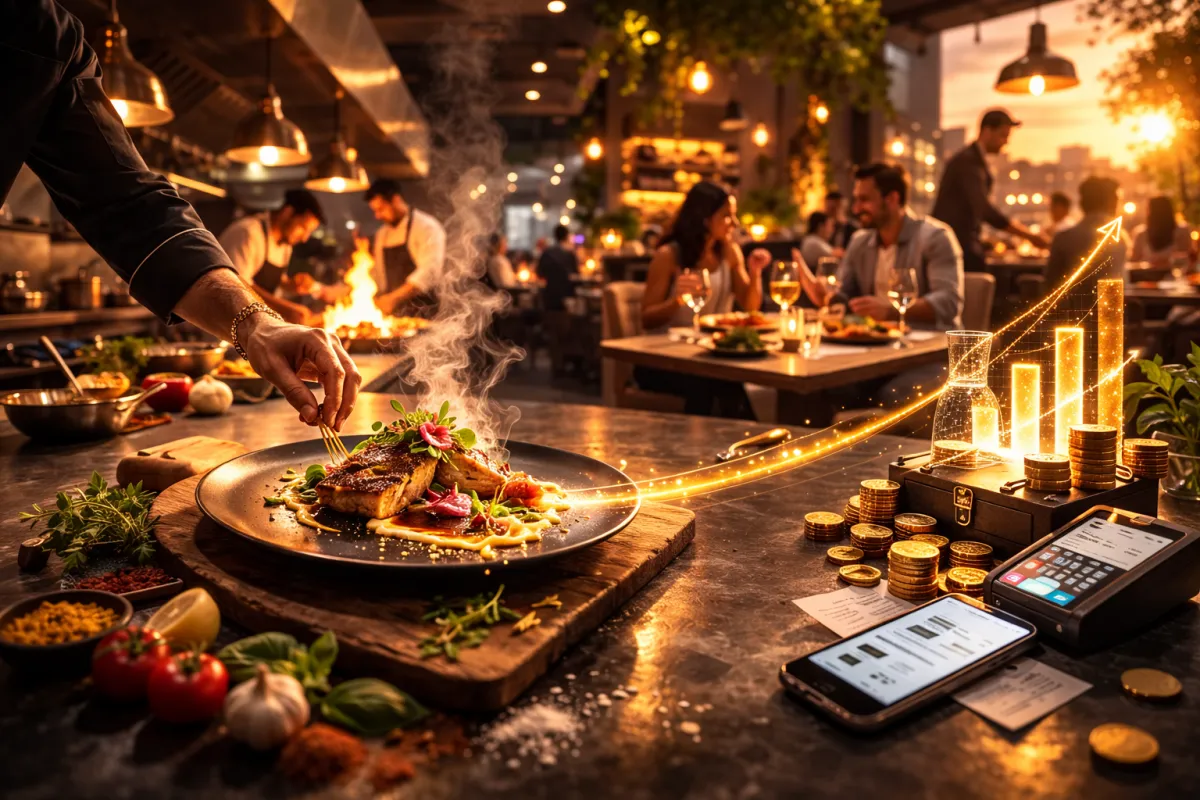
Excellence First, Money Follows: What Every Restaurant Owner Needs to Understand
I need to tell you something that took me years to fully understand.
To achieve excellence, you have to create the experience. Not chase revenue. Not post more fliers. Not run more offers. Create something that people feel in their bones when they walk through your door.
Here is the uncomfortable truth. If you are doing things just to make more money—those small desperate things like posting discount fliers, coming up with offers to attract anyone who will listen, trying to sell more to people who were never interested in your restaurant in the first place—you are essentially paying to tell more people that your restaurant is not worth full price.
Think about that for a second.
Every time you discount to attract customers you would not otherwise get, you are broadcasting a message: we are not good enough on our own merits. And the customers who come for discounts? They leave when the discount ends. They were never yours to begin with.
Wanting to make more money is not the problem. That is a reasonable goal. But getting more customers is not the solution if you have not mastered the customer experience yet. More customers visiting a mediocre experience just means more people who will never return. More people telling their friends to skip you. More proof that something fundamental is broken.
This is the fear point most restaurant owners live in. Wanting more revenue but chasing it in ways that actually make the problem worse.
What Excellence Actually Looks Like
I want you to walk through your restaurant with me. Not physically—mentally. Let us look at what actually happens from the moment someone decides to visit until long after they leave.
Start in the kitchen. How are your ingredients stored? How fresh are they really? Is the beef sitting next to the fish? Has the same pan been used for both without proper cleaning? These details seem invisible to customers, but they show up in the food. Always.
How does each dish get prepared? How long does it take? Can that time be reduced without sacrificing quality? Every extra minute a customer waits is a minute their anticipation can turn to impatience. Every detail in preparation either builds toward excellence or chips away at it.
Now the front of house. Are your servers on point? Are they dressed well—not fancy necessarily, but intentional? Do they know the menu deeply enough to make each dish sound special? Not just describe it—make it come alive? Can they tell a customer why this particular dish is worth ordering, what makes it different, what experience it will create?
Here is the thing most restaurants miss. If you set things up correctly, you do not need to sell customers on anything. They already want what you have. The job is not convincing—it is recognizing. Recognizing the moment each customer is ready for another drink, ready for the check, ready to hear about dessert. This is pattern recognition. It is paying attention. It is having someone whose entire job is watching, noticing, anticipating.
Your restaurant has to become that place people go to not just for good food, but for experience. For relaxation. To unplug from the outside world. For pure enjoyment. Almost like home, but with someone else doing the cooking and the cleaning and the caring.
That is what you are building. That is what excellence actually means.
What Food Actually Is
Let me tell you what I have come to believe about food.
Food is the fundamental creation that brings all species together. Not just humans—all living things gather around sustenance. But for us, it goes deeper. Food is love made visible. Connection made tangible. Emotion you can taste.
When you share a meal with someone, walls come down. Conversations go places they would not go otherwise. Relationships form in ways that cannot be replicated through any other activity. There is something about sitting across from another person, eating together, that activates parts of us we forget exist.
It does not matter if you are an extrovert or an introvert. After any period of isolation, that first meal with others feels like coming home to yourself. We crave this connection every minute of our lives without realizing it. It is built into us. It is what makes us human.
This is what restaurants actually provide. Not food. Not service. The experience of being human together.
The restaurants that understand this—that design every detail around creating this feeling—become the places people return to again and again. Not just for the cuisine. For how they feel when they are there. For the sense that someone cares about their experience. For the brief escape from everything outside those walls.
When Excellence Compounds Into Real Money
When you focus on creating the best product and the best customer experience, and you do that consistently over a long period of time, something happens. It compounds. Slowly at first—so slowly you might not notice. Then faster. Then exponentially.
Word spreads because there is actually something worth talking about. Reviews accumulate because people feel compelled to share what they experienced. Regulars bring friends because they want others to feel what they felt. The restaurant becomes known for something real, something that cannot be faked or bought.
And then—only then—does marketing actually work.
I have watched restaurants spend thousands on advertising with nothing to show for it. Running campaigns to attract customers who visit once and disappear. It feels like pushing a boulder uphill. Every day is a struggle. Every dollar spent feels wasted.
I have also watched restaurants where every marketing dollar returns multiples. Where ads work because the experience delivers. Where new customers become regulars because there is something genuinely worth returning to. Marketing for these restaurants feels like opening a gate—the customers were already looking, you just helped them find you.
The difference is not the marketing strategy. The difference is what happens after someone walks through the door.
Only the restaurants that have done the hard work of building excellence are capable of seeing real numbers from distribution. Real numbers—the kind that grow every month, that compound, that turn a struggling business into a thriving one. This is just the truth. The sooner you accept it, the sooner you can stop wasting money on tactics that cannot work until the fundamentals are in place.
The Teams That Make Excellence Possible
You cannot create excellence alone. The experience I am describing requires people. Many people. Each one contributing to something larger than themselves.
But here is what I have learned matters more than skills: traits.
Predictability. Reliability. Trustworthiness. The willingness to work hard not because someone is watching, but because that is simply who they are. These traits are harder to find than any technical skill. Skills can be taught in weeks or months. Character is formed over years, and it either exists or it does not.
The leader sets everything. If the leader embodies these traits—if they are predictable, reliable, trustworthy, hardworking—the team will follow. Not because they are told to, but because that is the standard they see lived out every day. And if the leader is chaotic, unreliable, cuts corners? That flows downhill too. No amount of training or systems will fix what leadership breaks.
When you build the right team, everything becomes customizable. How you source ingredients from suppliers. How you store and prepare them. How dishes are plated and served. What the server says about each item. How the customer eats it, what they want with it, what happens after they finish, how they feel when they leave, whether they think about you days later, whether they come back, whether they bring others.
Each of these moments is a touchpoint. Each touchpoint is an opportunity to reinforce excellence or undermine it. And together, they form an ecosystem—systems within systems, all connected, all affecting each other in ways you cannot always predict.
When you see your restaurant this way—as a living ecosystem rather than a collection of separate tasks—everything changes. A small improvement in one area ripples through the entire operation. A small breakdown does the same. Nothing is isolated. Everything matters.
The Restaurants That Will Win in the AI Era
Now I need to talk about something that is changing everything.
Everyone is talking about AI right now. Most of what I see in the restaurant industry is surface-level thinking. Use ChatGPT to write captions. Generate menu descriptions. Create social media posts faster.
That is not where the real opportunity is.
That is efficiency. And efficiency does not change your business.
Leverage does.
The restaurants that understand leverage will pull away from everyone else in the next three to five years. And the ones still using AI to save a few minutes on captions will wonder why they got left behind.
The Real Problem Is Not Content. It Is Control.
Most restaurants today still operate like this: customers come from Google or delivery apps, there is no customer data, no direct communication channel, no predictable demand. Every week starts from zero.
That is not a marketing problem. That is a control problem.
AI becomes powerful when it helps you control demand—not just create content.
Let me show you what I mean.
High-Leverage AI Moves Most Restaurants Are Not Using Yet
These are not nice to have. These are effort-to-massive-output plays. The kind of leverage that changes the economics of your entire operation.
Your own customer database. This is the gold mine most restaurants are sitting on without realizing it.
Instead of depending on Google, Uber Eats, or random walk-ins, you can use AI and automation to build a guest database from WiFi logins, reservations, and online orders. Then automatic follow-ups after visits. Smart offers sent only to past guests who actually liked your restaurant. Win-back campaigns for customers who have not returned in sixty days.
One automated system like this can bring back hundreds of customers per month. Most restaurants still do not own their audience. They rent it from platforms that take thirty percent and give nothing back. This is the biggest gap in the industry.
AI review engine. If you have great service—and you should, if you have been listening to everything I said about excellence—AI can detect happy customers automatically. Send review requests at the exact right moment. Respond to every Google review instantly in your voice. Flag negative experiences before they become public problems.
Reviews are not just reputation. They are your number one discovery channel. One of our clients went from 900 to 4,500 reviews in six months. That changed their visibility completely. They went from invisible to impossible to ignore.
Content that feels human. Most restaurants still post posters, offers, and menu graphics. The algorithm ignores all of it. Nobody engages. Nothing happens.
The real leverage is different. Customer reactions. Real moments captured in the restaurant. Staff personality coming through. Behind-the-scenes energy that makes people feel like they know you.
Then AI analyzes which videos perform best and turns those into paid ads. Organic content becomes data. Data becomes paid distribution. Paid distribution becomes predictable traffic. That is where the scale happens.
Weekday demand automation. This is where AI becomes genuinely powerful.
Instead of hoping customers come on slow days, AI can trigger campaigns automatically when Mondays are trending slow, when lunch bookings drop below a threshold, when weather changes and people are more likely to order delivery, when events happen nearby that you could capitalize on.
You are no longer guessing. You are manufacturing demand.
This is the difference between busy weekends with empty weekdays and a full week every week.
AI customer service layer. Most restaurants lose customers simply because they do not respond fast enough. Someone sends an Instagram message asking about hours. No response for six hours. They went somewhere else.
AI can handle Instagram messages, website chat, reservation questions, menu inquiries, catering requests. Twenty-four hours a day, seven days a week. You never miss a customer again.
The Real Shift Most People Miss
AI is not replacing your team. AI is becoming your operational layer.
The restaurants that win will have great food and great experience—that foundation we talked about earlier. But they will also have systems that bring customers back automatically. Systems that stabilize weekday traffic. Systems that turn happy customers into reviews and reviews into new customers.
This is the new advantage. Because once demand becomes predictable, everything changes.
Staffing becomes easier because you know how many people you need each day. Inventory becomes easier because you can forecast accurately. Cash flow stabilizes because revenue is not random. Stress drops because you are not wondering if anyone will show up.
And now you are running a business—not reacting week to week, hoping things work out.
What Most Restaurants Will Do Versus What Winners Will Do
Most restaurants will use AI to write captions, generate posts, save time on small tasks. That is fine. It helps a little.
What the winners will do is different. They will use AI to control demand. To own their customer data. To build systems that run without constant attention. To turn attention into revenue predictably.
That is the difference between using a tool and creating leverage.
Where We Are Going
For me and my team, this is not just marketing anymore.
It started that way. Years ago, I thought I was building a marketing agency. Help restaurants get more customers, collect a fee, move on. Simple.
But the more I worked in this industry—the more restaurants I saw succeed and fail, the more patterns I recognized, the more I understood what actually moves the needle—I realized marketing is just one piece of a much larger system.
What we are building now is Restaurant Growth Operations. Systems that bring customers, bring them back, stabilize weekdays, scale reputation, and turn attention into revenue.
Because in this industry, the restaurants that survive work hard. The restaurants that win build systems.
I have to be honest with you: this feels like play to me. I know it feels like work to others. That is why so many agencies avoid restaurants. They think the margins are too thin, the owners are too difficult, the problems are too messy. They do not understand what this industry can become when someone actually commits to figuring it out.
But I have fallen in love with it. I see what restaurants are capable of when everything clicks—when the product is excellent, the experience is memorable, and the systems are running. I have watched owners transform from stressed and barely surviving to confident and genuinely thriving.
Restaurants are not inherently low-margin businesses. They become low-margin when the fundamentals are wrong and the systems are missing. But when everything is right? Margins expand. Revenue grows. The compounding begins.
The Question You Need to Answer
If you are running a restaurant right now, ask yourself one question:
If you stopped posting tomorrow, would customers still come?
If the answer is no, you do not have marketing. You have activity. And activity does not scale.
The restaurants that win have built something deeper. They have excellence that speaks for itself. They have systems that bring people back. They have control over their demand instead of hoping for it.
That is what we are building with every restaurant we work with. That is what this industry needs more of.
The Invitation
If any of this resonates—if you are building a restaurant and want a partner who sees growth this way—I would love to hear from you.
Send an email to [email protected]
Tell me about your restaurant. Not the numbers. The vision. What are you trying to create? What does excellence look like in your mind? What is standing between where you are and where you want to be?
I will read every word. I will respond personally. And even if we never work together, I hope this perspective stays with you.
Because the restaurants that change how they see themselves are the restaurants that change what they become.
And the money? It follows. Always.
Trust me on this one. It always follows.
Frequently Asked Questions
What do you mean by "it is not about the money"?
I mean that chasing revenue directly—through discounts, desperate offers, and attracting anyone who will come—usually makes things worse. The restaurants that make real money focus on excellence first. They build something worth paying full price for. The revenue follows the quality, not the other way around.
How do I know if my customer experience is actually good?
Look at your repeat visit rate. If customers come once and disappear, something is broken. Look at your reviews—not the star rating, but what people actually say. Ask yourself: would I be excited to eat here if I did not own it? Be honest. Most owners overestimate their experience because they are too close to see it clearly.
What is the difference between efficiency and leverage with AI?
Efficiency saves you time on tasks you were already doing. Leverage changes the economics of your business entirely. Writing captions faster is efficiency. Building a system that automatically brings back lapsed customers is leverage. One saves minutes, the other generates revenue.
Why is owning my customer data so important?
Because without it, you are renting access to your own customers from platforms that do not care about your success. Google can change its algorithm. Uber Eats can raise fees. Instagram can throttle your reach. But a customer database you own? That is an asset no one can take from you. You can reach those people directly, any time, at no additional cost.
How does AI help with weekday demand specifically?
AI can monitor patterns and trigger campaigns automatically. If your data shows Mondays trending slow, the system can send offers to past customers before Monday arrives. If weather is bad, it can push delivery promotions. If a local event is happening, it can target people nearby. You stop reacting to slow days and start preventing them.
What kind of content actually performs for restaurants?
Real moments. Customer reactions. Staff personality. Behind-the-scenes glimpses. Anything that feels human rather than produced. The algorithm rewards content people actually engage with, and people engage with other people—not flyers and menu graphics. Once you find what works organically, AI can help you scale it through paid distribution.
How long before I see results from these systems?
It depends on your starting point. Review velocity can improve in weeks. Customer database building takes one to three months to show meaningful scale. Weekday demand automation typically shows impact in sixty to ninety days. The compounding really becomes visible after six months of consistent execution.
Do I need technical skills to implement AI in my restaurant?
You need someone with technical skills, but that person does not have to be you. This is why working with the right partner matters. We handle the technical implementation. Your job is to focus on the product and experience—the things only you can do. The systems should run without requiring your constant attention.
What if I have been burned by agencies before?
Most restaurant owners have. That is why we focus on systems and measurement rather than vague promises. We show you what is working, what is not, and what we are doing about it. We track revenue impact, not just vanity metrics. And we are honest about what we do not know—because anyone who claims to have everything figured out is lying.
Is this only for certain types of restaurants?
Our deepest expertise is Indian and Asian-fusion restaurants. We understand the culture, the customers, the nuances. But the principles—excellence first, systems second, leverage through AI—apply to any restaurant that serves quality food and wants to grow sustainably. If you are not sure whether we are a fit, send the email anyway. We will tell you honestly.
What does "restaurant growth operations" actually mean?
It means we think beyond marketing. Marketing is one piece. We also think about retention systems, review velocity, customer data ownership, weekday demand generation, AI automation, and building operations that scale without constant owner attention. The goal is predictable growth—not random spikes of activity that disappear next month.
If I stopped posting tomorrow, would customers still come?
This is the question that reveals everything. If the answer is no, you are dependent on constant activity to generate any demand. That is exhausting and unsustainable. The goal is to build enough excellence and enough systems that customers come regardless—because the reputation is real, the experience is memorable, and the systems keep bringing people back.
Jeffry Jonas is the founder of Anth Consulting, a restaurant growth operation focused on Indian and Asian-fusion restaurants. After five years in the trenches with 44+ clients and over 1,000 conversations with restaurant owners, he believes restaurants can be high-margin, high-impact businesses when excellence and systems work together. He is still learning what that means—and plans to keep learning for a long time.
